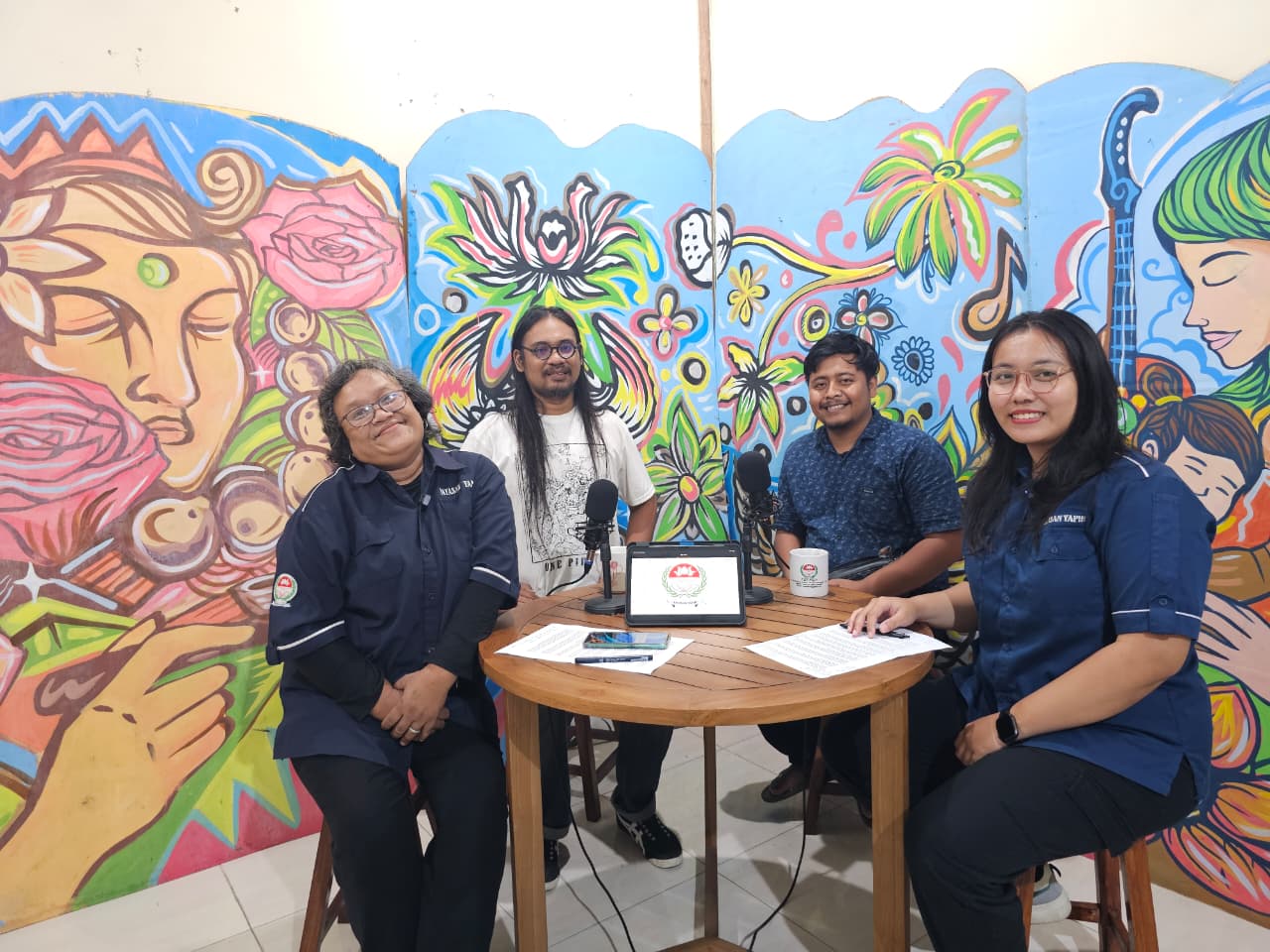
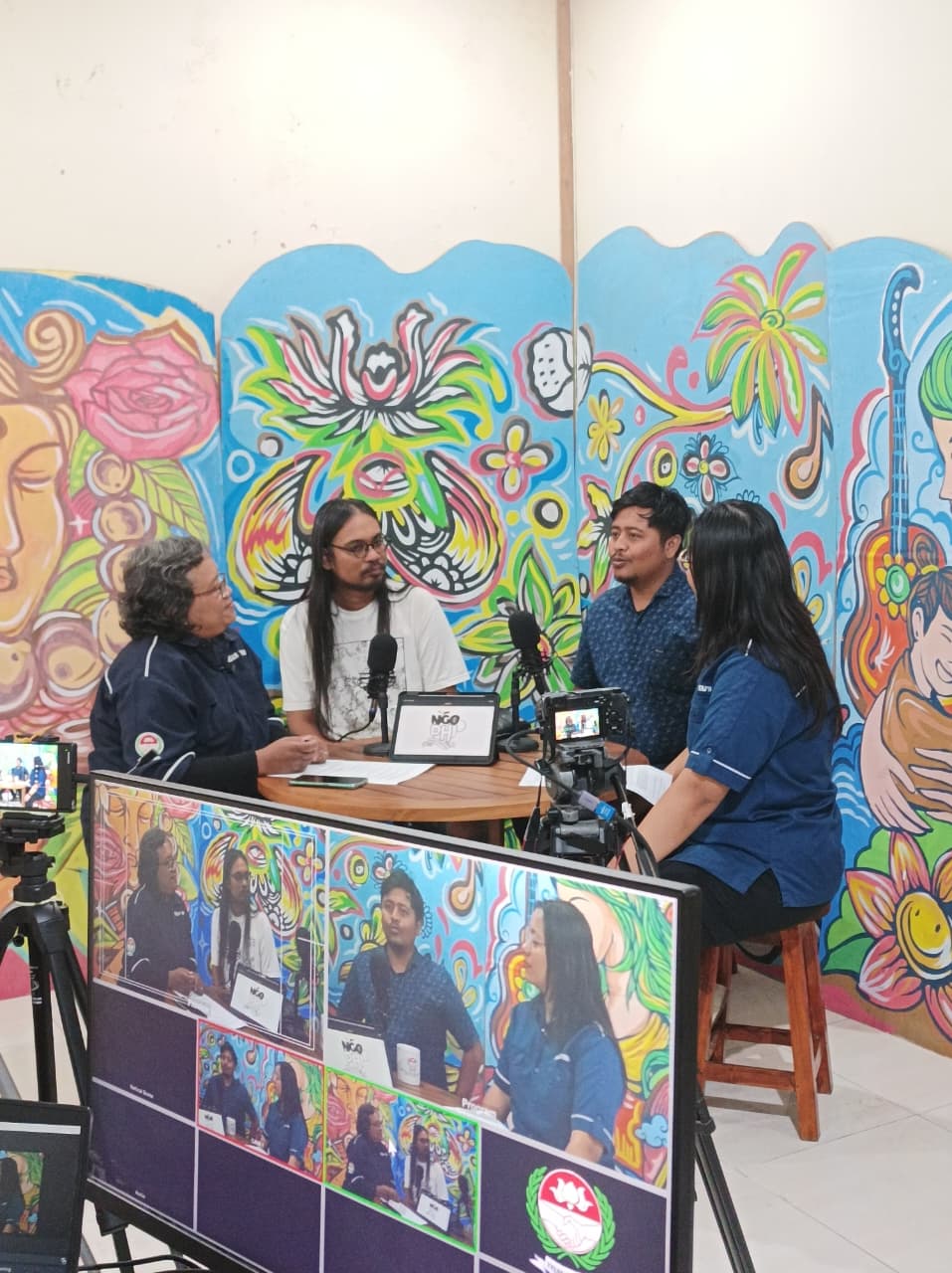
Dimas Suro added that communities needed to maintain vigilance. The momentum for change might be present when the issue people faced reached a certain point. “Each of us has the obligation to maintain that fire,” he highlighted. That fire did not need to be present in the form of a struggle. There were education, organisations, communities, social movements, art, culture, and young people’s confidence to express opinions.
The discussion continued with the life of indigenous communities, of peasants, of fishermen, and environmental defenders. The State often used terms such as development and sovereignty when they implemented policies. On the other hand, communities still faced issues when they fought for their land and living spaces. The question about independence became more concrete: who had the rights to determine how a space was used?
Wahyu argued that the issue was related to the tendency to impose a common standard. The diverse ways of living could be marginalised when one standard applied to all. The same issue was evident in urban life. Solo, for example, experienced aesthetic growth as a city. There were murals and artworks in public spaces. There were creative projects involving artists. For Wahyu, such development still necessitated critical review. Artists should not just be treated as workers who finished orders. “in the case of city projects, artists became anonymous,” he said.
Artists’ names were often not displayed after their works entered the public spaces. There was also view that works displayed in public spaces were public properties. That begged the question about intellectual property right and the position of artists. If artworks were the product of artists’ ideas, endeavours, experience, and anxieties, how far would the artists’ identity and rights be respected?