Knowing People Behind the Institution(s), Identifying Strategy, and Measure Self as Advocate

Knowing People Behind the Institution(s), Identifying Strategy, and Measure Self as Advocate
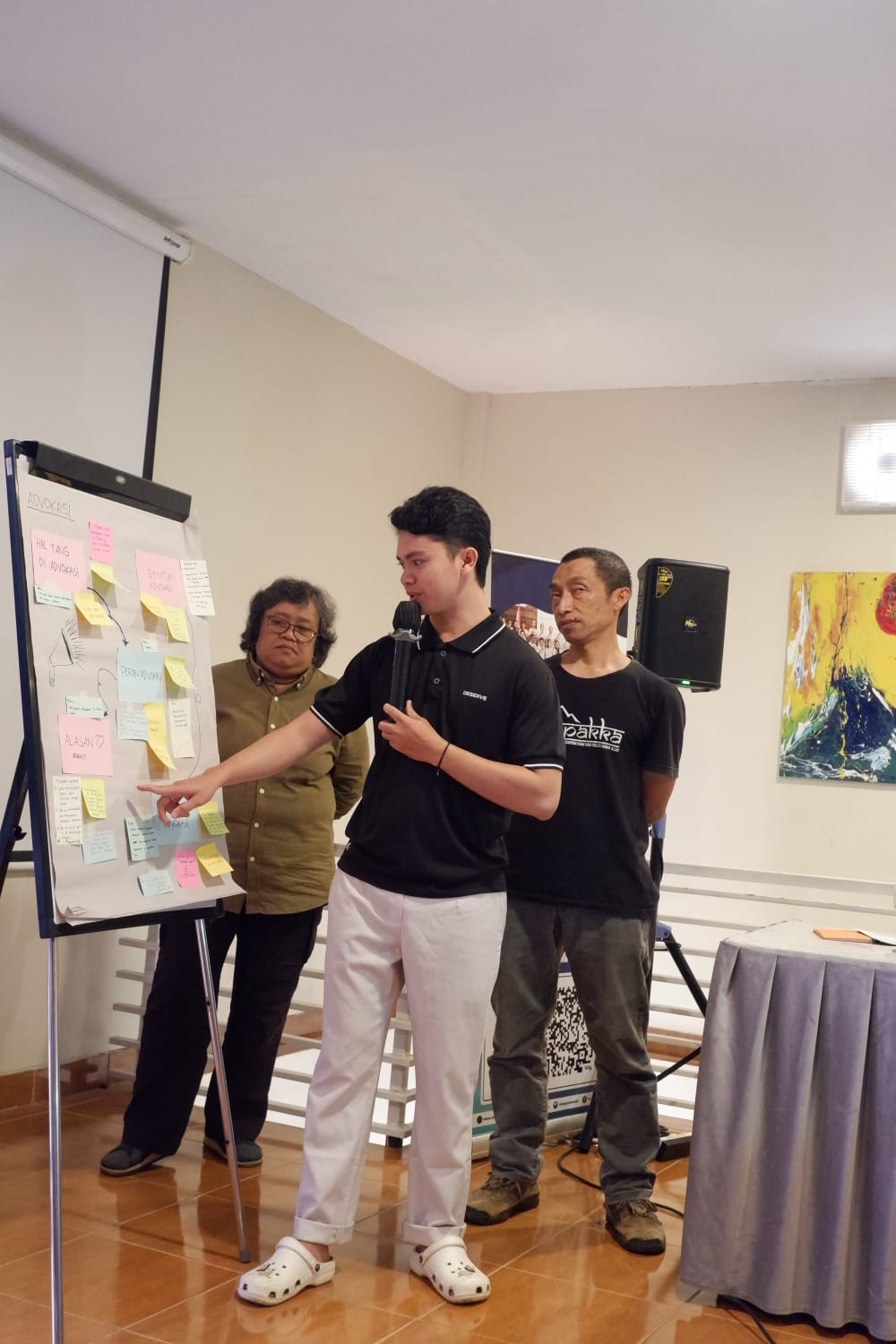
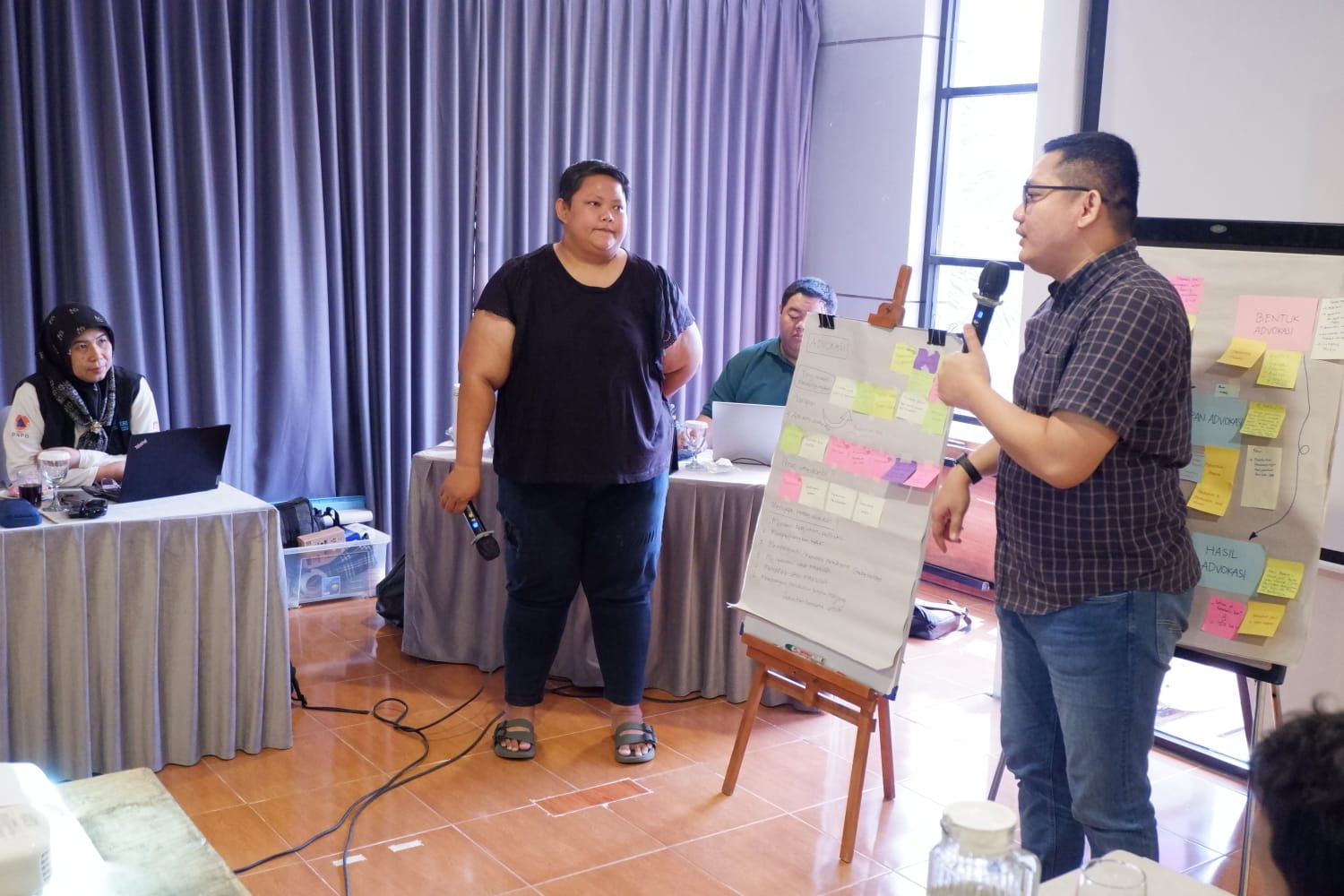
The third day of advocacy training organised by Yayasan Sheep Indonesia (YSI) and Mitra ToGETHER - Yayasan YAPHI, Cappa Keadilan Ekologi, Gereja Kristen Jawi Wetan (GKJW), Jaga Balai, and Mitra Wacana entered a more practical part in Balkondes Wringin Putih, Borobudur, Magelang on 19-22/08. After two days of identifying issues, formulating charges, objectives of change, and mapping actors, the discussion moved on to a key question: how to achieve desired changes?

YSI facilitator, Martin Dennise Silaban started his session by reminding participants that an institution was always dependant on humans to move forward. An organisation might change, policies might shift, but decisions would always be made by humans driving from the inside. “Regardless, humans were always representing institutions, hence decisions would always be made by humans, by people, by personnel,” Martin highlighted.

He gave a simple example. When someone mentioned an organisation such as BPBD (Disaster Management Authority, DPRD (Parliament), Civil Society Organisations, churches, NGOs, or other government institutions working and making decisions, these were not abstract entities, rather people who had different interests, experience, relations, habits, even pressures. For that reason, after participants mapped institutions or actors with high-level of influence and supported their demands, the next step was to choose specific individuals to study.

“Choose one organisation, then delve deep. Choose one persona from that organisation,” he said.

The concept of persona was nothing new for some participants. Facilitator, Tri Sulistyowati linked it to the previous training. In innovation work, persona was used to identify in much deeper level who was the person someone wished to help: How was that person’s life, his/her social position, family, conditions of the area where he/she lived, to things that influenced their thinking. In advocacy, the same approach was used to read actors."Here when we talked about persona, how are we to know who’s who in the organisation(s) that you chose earlier,” said Tri.

Hence, actor mapping did not stop with the name of the organisation. Participants had to go further into who had the influence within that organisation, who could be the entry point, who had close relation with decision-makers, and who could be the bridge to that actor.

Martin gave an example, to approach a government official, it was not enough for participants to know the person’s institution and position. They had to know the background of that person, his/her hobby, his/her associates, to ways to engage the person in conversation. “If you want to approach somebody here, join the run. Do you have enough money to join?” he said, describing how what looked like simple things could be entry points to start a relation. For Martin, such information was not simply small talk. It could be part of an advocacy strategy.

In social change experience, decisions did not come from formal path. There was time when official letter, formal meeting, or plea for hearing did not result in anything. On the other hand, informal conversation was known to open the door.

Then, participants were asked to look again at stakeholder mapping they had done. If the organisation was already known, then the next question was: who was the person inside, who influenced that person, and who could be the bridge?

The discussion then moved on to advocacy strategy. Martin reminded that the demand(s) they already formulated did not automatically explain how to achieve it. There was a distance between the objective of change and the strategy chosen. That gap often forced advocacy work to go in circle, which was tiring. "As it happened there was inconsistency between what to achieve and the strategy. So, people just went around and around, and got frustrated because they never saw whether the strategy fit with what they intended to do,” he emphasised.

For that reason, participants had to look again the two demands that they had formulated. One such demand was related to capacity building of local actors, involvement in decision-making, access to resources, and protection. Another demand was related to coordination and clean governance.

The question was: At what level did the people want the change to happen? Was it at policy change level, decision level, practices, or attitudes/behaviour level?

Martin emphasised that advocacy did not always mean changing policies. “Advocacy did not always target policies,” he said. Changes could be directed at a particular decision, a practice that went on the field, and someone’s or an institution’s attitude. The point of change might differ, the strategy used did not need to be uniform.

For policy change, participants were familiar with a number of choices, from litigation, legal standing, judicial review, preparing academic paper, dialogue, lobby, and public campaign. There was also reactive strategy such as mass mobilisation, protests, and position statement when a policy was in place but not implemented or even be ignored/violated. Conversely, proactive strategy could be done prior to a policy being formalised. For example, when a draft law was in the making, organisations could be involved in preparing academic paper, discussions, lobby, and gathering supports.
Image
Yet, not all advocacy works had to be at the front line. Martin re-introduced the position of advocacy: work with the base, support work, and frontline work. An organisation could choose to work directly with communities, support other organisations, or be at the frontline vis-à-vis policy makers. The three options could be done simultaneously if an organisation had the capacity and resources to do so. “Not all work had to be frontline work,” he said.

The choice for any position was critical because advocacy strategy was also related to capacity and risks that an organisation had or would be able to deal with.

The discussion became more concrete when a participant was asked to choose an actor and prepare strategy based on the persona already chosen. The first group in simulation chose Ferry Irwandi as a figure with influence to support humanitarian issue. That choice had its reason. Participant saw Ferry’s past work, his social media activities, podcasts, and big audience.

They then prepare a campaign idea for a series of podcast. Three episodes were planned to showcase their demands. The first episode discussed local actors often muzzled in decision-making, access transparency to aid resources, and the importance of involving local actors. The second episode talked about transparent and accountable partnership for disaster response. The third episode discussed local actors and volunteers for disaster response who were often ignored and who did not have sufficient protection.

Yet, participants did not just stop at making contents. They mapped the stages of approach in detail. The first step was to develop personal communication with Ferry and his team. That approach not only aimed at asking for a collaboration, but also explaining the urgency of the issue, the benefits of collaboration, common vision and values, and reasons why the podcasts were important for the two parties.

After initial agreement, they prepared content brief, then negotiated with Ferry’s team. At this stage, sensitive issues were discussed: the diction used, the issue to highlight, the data that could be presented, and the limits of the narrative. The next stage was synergising data and risks. Participants were aware that making digital campaign was not simply about production and publication. There were consequences on security that had to be taken into account.

Vera explained the possible risks, from doxing, digital terror, buzzer, to content hingga takedown. For that reason, mitigation strategy had to be prepared even before production began. Communication with the parties involved, for example, had to consider digital security. Documents and vunerable resource people could be anonymous. Document or photo metadata used also had to be erased. Even the location of shooting had to be examined to ensure that it did not give out leads that would endanger certain individuals/parties.

Before screening, content had to be scrutinised and reviewed. Participants considered the involvement of legal aid organisation with interest in digital security to see potential legal risks of the content. Distribution strategy had to be taken into account too. Not just one person kept the master file. On the screening day, the security of social media account was critical. After the screening, digital traffic had to be monitored to see whether there were threats or attempts to get personal information from people who were involved.

“If we talk about one campaign strategy, and involve one familiar figure, we also need to think about safety, of the person we ask to work together and also ourselves,” said Tri. For participants, that experience showed that advocacy strategy was not as simple as choosing campaign, lobby, dialogue, or mass mobilisation. Each choice had consequences to the method, resources, organisational capacity, and potential risks.

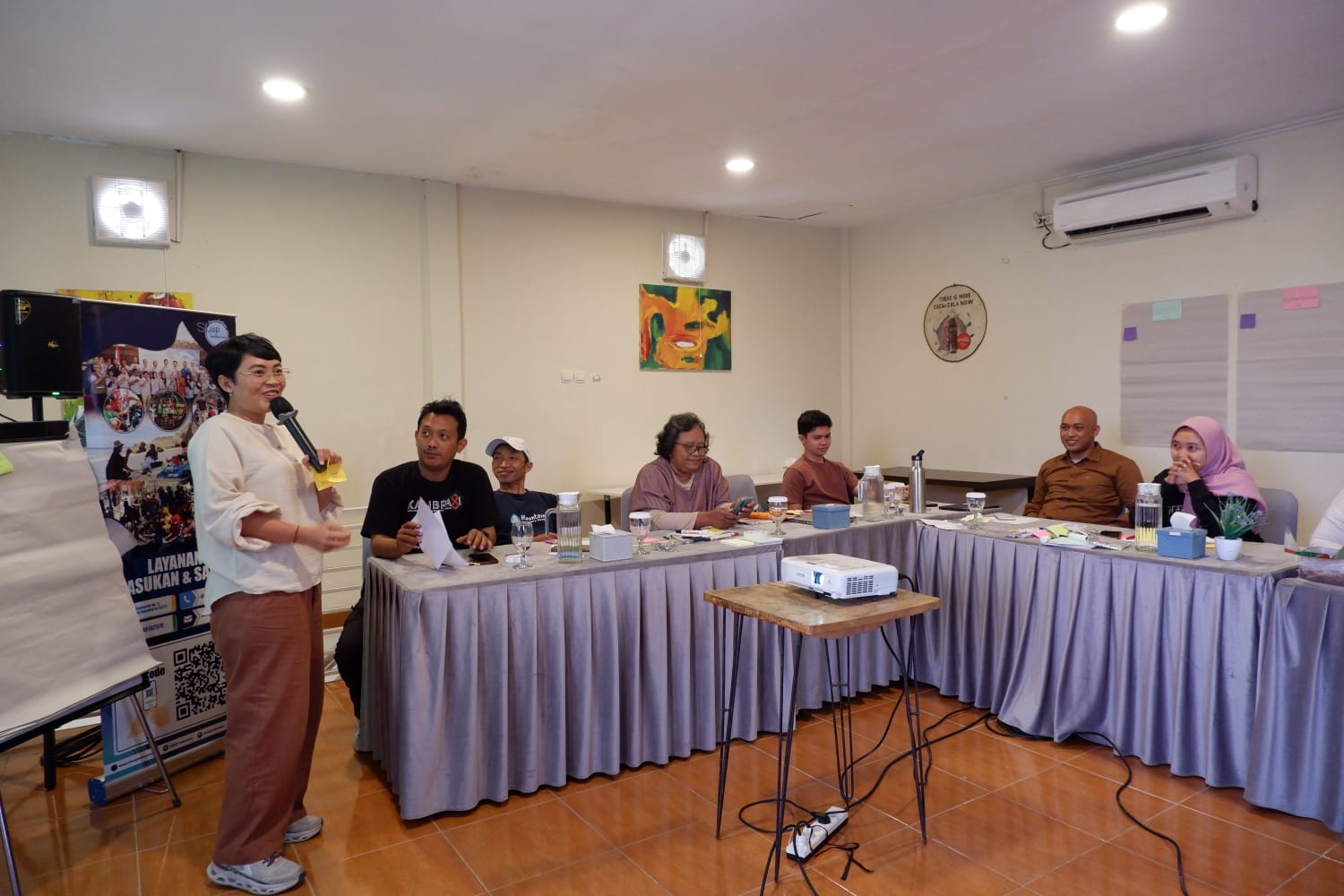
Then, participants looked at the more basic question: whether we were true advocates? Tri asked participants to reflect on a number of things. First, capacity for communication. An advocate had to be able to explain issues clearly and convincingly. The target (audience) had to understand the key message. Second, leadership. Advocacy necessitated ability to give an example, move team, and build networks. It was not enough for him/her to have demands if he/she did not have the ability to engage people to act together. Third, attitude. An advocate had to be consistent in his/her alignment, particularly to the vulnerable groups. That advocate had to have the resolveI when faced with resistance and had the confidence to take measured risks. Fourth, ability to use advocacy instruments. Data, research, media, lobby, public campaign, and mass mobilisation had to be employed to fit the need. No one strategy was fit for all issues. Fifth, strengthening the content. "Advocacy without proof was only chit chat,” Tri highlighted.
Image
Image
For that reason, ability to understand issues and answer critical questions with data and arguments was critical part of advocacy. The three-day training not only resulted in an advocacy canvas. It became a space for participants to reflect on how their respective organisation worked.

One participant acknowledged that he/she learned more, semakin ia merasa masih banyak hal yang belum diketahui. Metode kanvas advokasi, menurutnya, memberikan cara baru untuk membaca persoalan, menentukan tujuan, memilih strategi, sekaligus memperhitungkan risiko dan mitigasi.

Other participant said that the training helped her abandon the old way of seeing advocacy through the “horse blinders.” Advocacy was often understood simply as a campaign, litigation, or mobilisation. In fact, the long process necessitated meticulous and long process.

For Alfi, from Mitra Wacana, who never attended advocacy training before, the three-day training experience was an invaluable opportunity. He saw the process as a complex lesson and a new perspective on how advocacy work could be systematically designed.
Meanwhile other participant had a long reflection on his/her organisation’s experience. They already did many things for years, but they might not have framed them in a structured advocacy workflow.

The training found its significance: not to give one prescription about how advocacy had to be done, but help participants to look again what they had done, find things missing, and plot the next steps.

Martin highlighted that the position of facilitators was not as someone who knew all. They created safe space for participants to experiment, to make mistakes, and to find their most suitable way. “This is not a classroom, but a joint learning space,” he said.

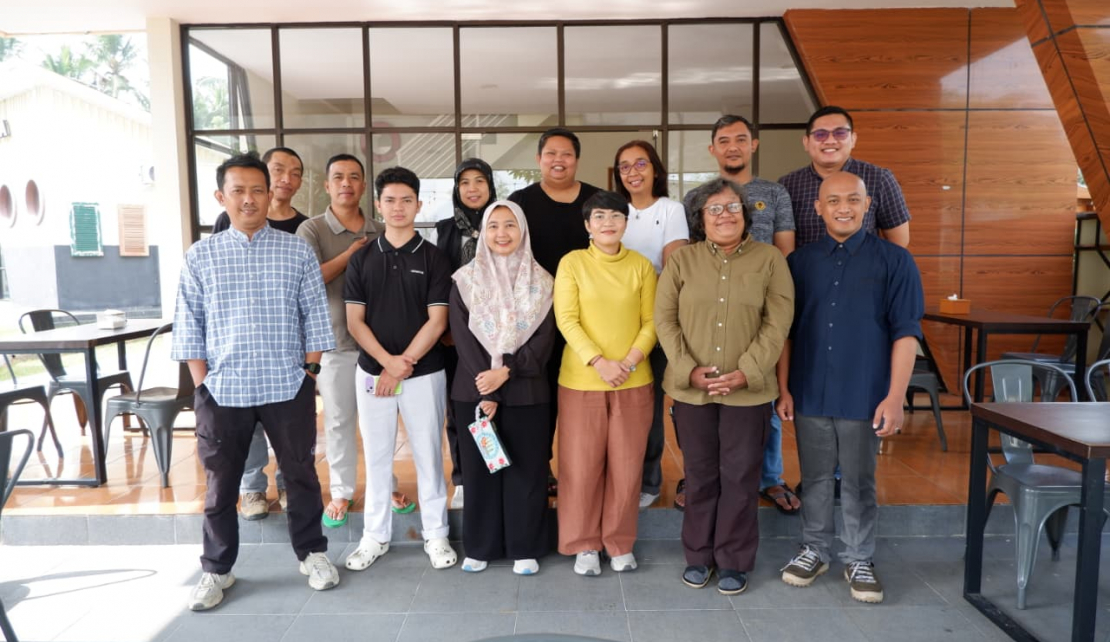
Tri added that the process had gone on long before the three-day training started. For about two years, participants worked together in humanitarian actions and disaster response. Training was one means to strengthen capacity as equal partners.

The reality was that advocacy did not stop at making demands. It necessitated ability to identify who could change the situation, understand humans behind the institution, choose the right entry point, develop strategy, read risks, and know limits of one’s ability. Changes did not emerge from formal setting. Often, it started from a conversation, a relation, similar hobby, or someone as a bridge to decision-making.

From there, advocacy work started not simply with loud screams, but with knowing who to talk to, wat to fight for, how to achieve it, and what risks had to be taken into account for real change to happen. (Ast)