Humanitarian work did not stop at how assistance could reach the disaster-affected communities. Behind every assistance, there were principles, standards, capacity, protection mechanism, and responsibility to ensure that assistance truly answered the needs of affected population.
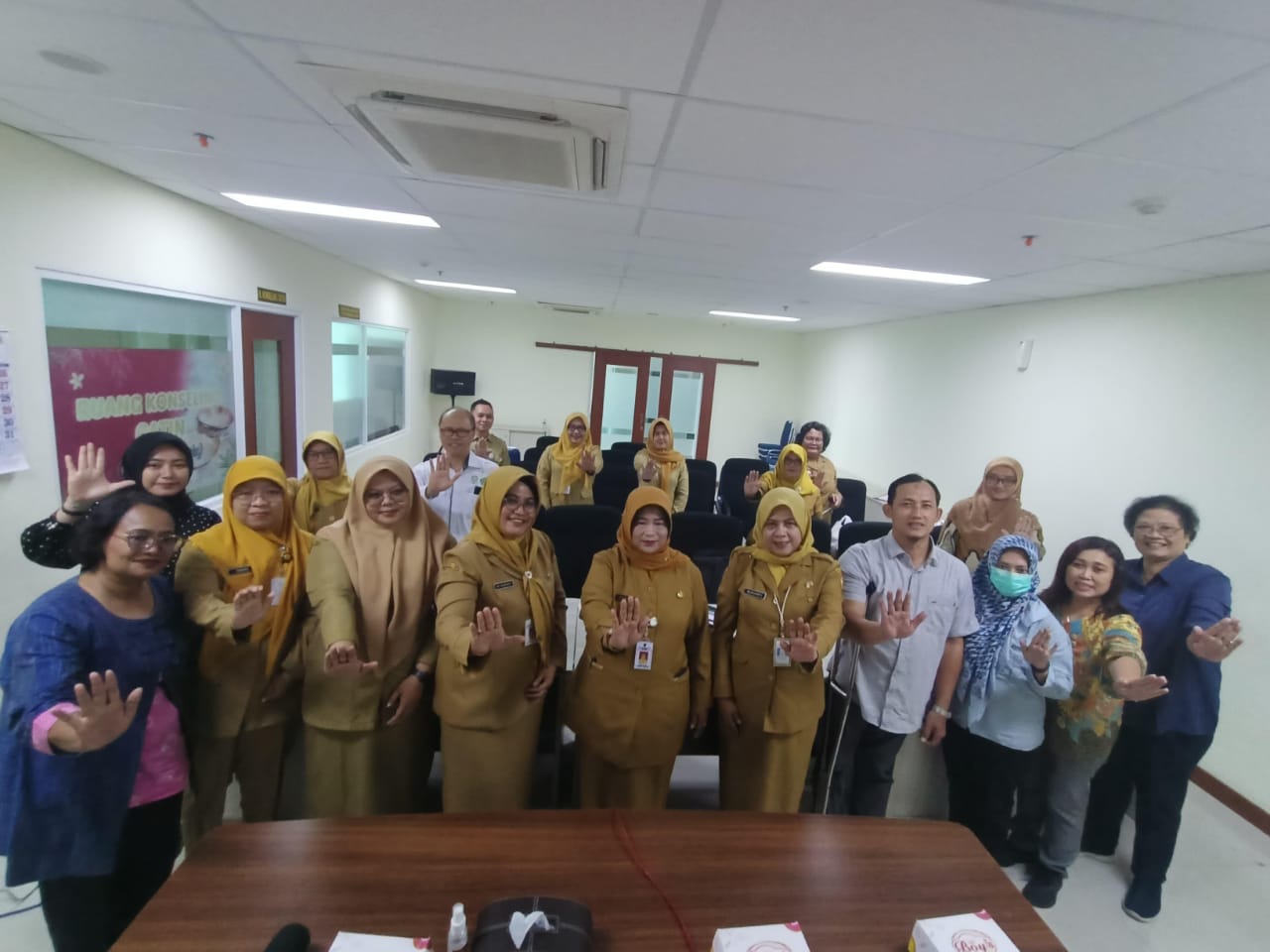
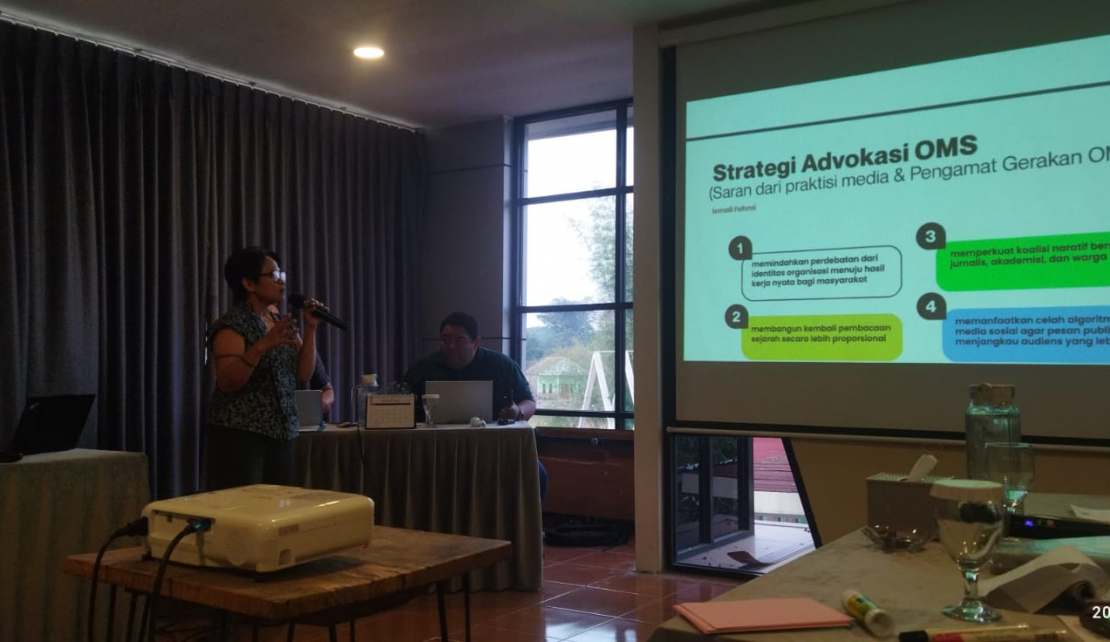
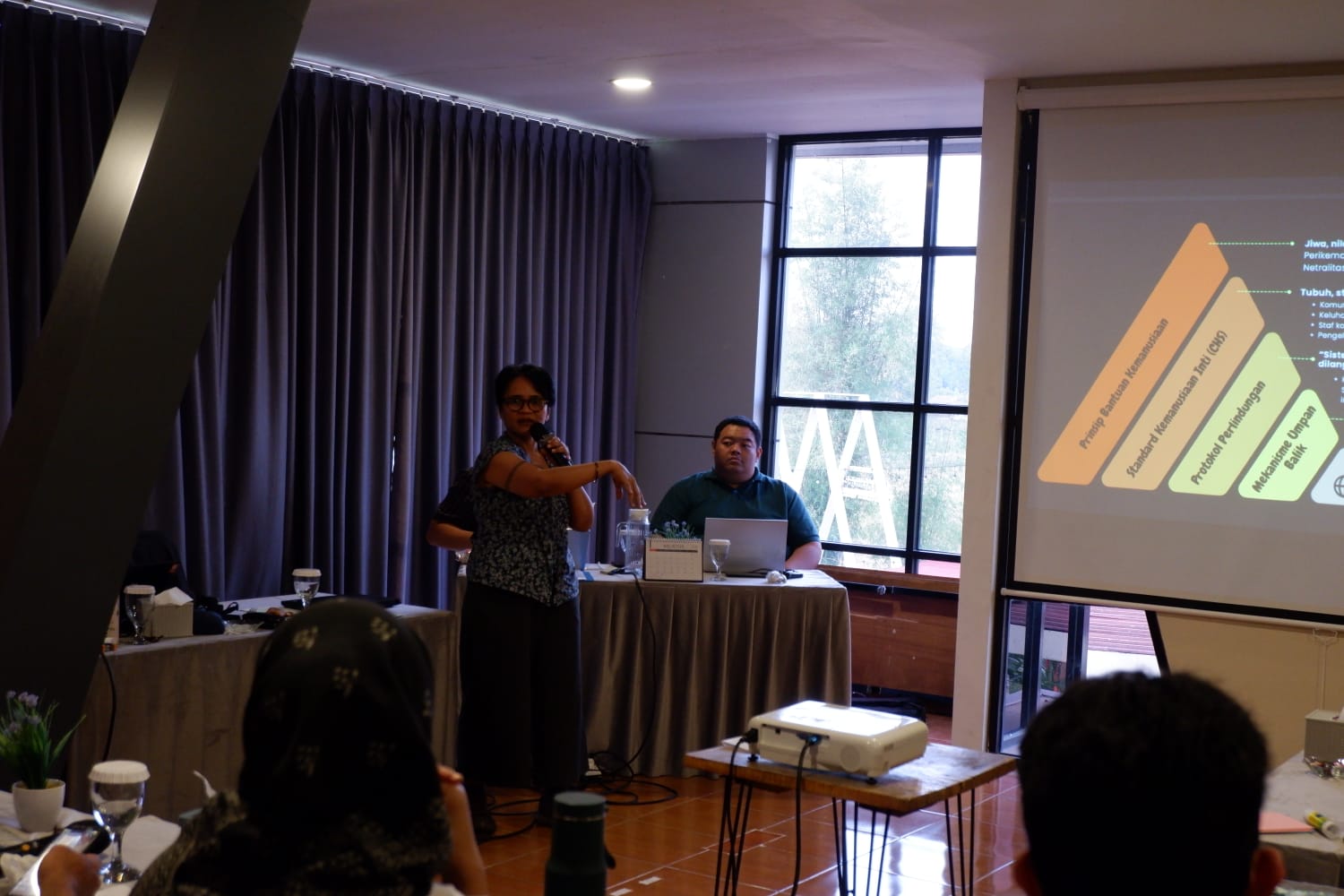
That was one topic of discussion moderated by the director of Yayasan Sheep Indonesia, Yulia Rina Wijaya during a workshop with Mitra ToGETHER (partners) - Cappa Keadilan Ekologi, Gereja Kristen Jawi Wetan (GKJW), Yayasan YAPHI, Mitra Wacana, and Jaga Balai at Balkondes Wringin Putih, Borobudur between 19 and 22/8. She started the session by reminding of a number of basic humanitarian aid principles to participants, some of whom had experience implementing disaster response actions. “In the context of humanitarian assistance, you may have done disaster response,” she said.
For those who had been involved in disaster response, terms such as humanitarian principles, Core Humanitarian Standard (CHS), safeguarding, and complaint mechanism were not new. Yet, Bu Rina highlighted that refresher was necessary for those terms because in disaster situation, the known principles could easily be forgotten.
There were four key principles for humanitarian work - humanity, impartiality, netrality, and independense. The humanitarian principles meant that each response aimed to reduce human suffering anywhere the suffering happened. Impartiality affirmed that assistance was given based on needs, not religion, groups, identity, or certain closeness. “The basis for response was needs and reality as observed,” highlighted Rina.
The principle had to be translated into working standard. When humanitarian principle served as the soul or ethical value in response, then the Core Humanitarian Standard talked about quality and accountability. For example, when an organisation provided water services and sanitation, shelters, health, or other services, the organisation had to understand the applicable standard. It was not enough for assistance to be given out of good will. There was quality standard to meet. “when we do intervention, what is the qualification standard? Does it fit with the organisational standard? If there are infringements, we can do advocacy on the issue,” she said.
On the other hand, organisations also had protection or safeguarding system. The system ensured that humanitarian work did not create new problems. Prevention of corruption, harassment, exploitation, and fraud were part of it. The feedback and complaint mechanisms were critical. communities, survivors, and witnesses had secure channel to submit their complaints.
Interestingly, Rina said that the principles not only applied in disasters. "When we implement any program, not necessarily disaster programs, I think the principles apply,” she highlighted.
Participants’ experience showed that the issues on the field were often more complicated than thought. A participant from GKJW, Referend Yoga, for example, told how the church received information from colleagues and church members. When there were reports of sexual violence in family, the church could take a pastoral role. In disaster response, GKJW was also involved in a number of aid activities. Yet, the organisation started to design psychosocial service consolidation so that response did not stop at general assistance, but provided accompaniment that matched people’s needs.
Yulia Rina said that such step was relevant with CHS. When an organisation said that it provided certain services, that organisation had to ensure that people who executed those services had the required capacity. "When an organisation states that it provides humanitarian aid, it must make sure that it is competent before making any assessment,” she emphasised.
The same thing applied to organisations when they received complaints. There was procedure to understand: how to maintain secrecy, how to protect the people submitting the reports and the victims, and how to ensure the process to deal with the complaints did not create new risks. The issue became more complex when disaster happened on a large scale and many people came to the location.
Yulia Rina reminded the experience during Aceh Tsunami response and other major disasters. When many international organisations came, coordination did not always proceed as expected. Even, there were situations when the sub-national governments had difficulty managing the organisations offering aid. She also told an experience when a community health centre managed services in conjunction with certain international organisation and other organisations who came there could not directly provide aid. That experience showed that many organisations who came did not automatically mean response was becoming more effective. Without clear coordination and role division, the presence of organisations and volunteers potentially added extra burden for local communities and governments.
A similar issue was also evident when volunteers came to a remote area. A participant told the experience when communities at a remote location did not get any assistance because distribution access only reached areas more easily accessible. At this point, the principle of impartiality was tested. Those who suffered the most should have the priority. “those who suffered the most should have the priority,” said Yulia Rina. For that reason, data became highly critical. Information about who were affected, what were the needs, which areas had not received assistance, and who had the local capacity to help were all critical and had to be available.
Data was also critical for advocacy. When certain communities had not gotten any assistance i.e. food, for example, that information could become evidence to prompt the government or any other parties to move.