Conversely, they also learned to identify behaviours they needed to avoid, such as using mobile phones for too long a time, studying while also using mobile phones, receiving food from a stranger, following a stranger, giving home address to other people, or keeping important secret from parents.
The facilitators also asked children to talk about digital games they often played. Children screamed when they heard names such as Mobile Legends, PUBG, Sakura School Simulator, and Roblox. Almost all children played any of those games.
Through light conversation, children learned that playing gym was not prohibited. But they had to arrange the time well, and helped parents at home, and maintain caution of unknown individuals on the internet.
Another message was the importance of keeping private information. Children had to be careful not to accept any gift from strangers, not to share home address, and to always told the experience that made them uncomfortable to parents or trusted adults.
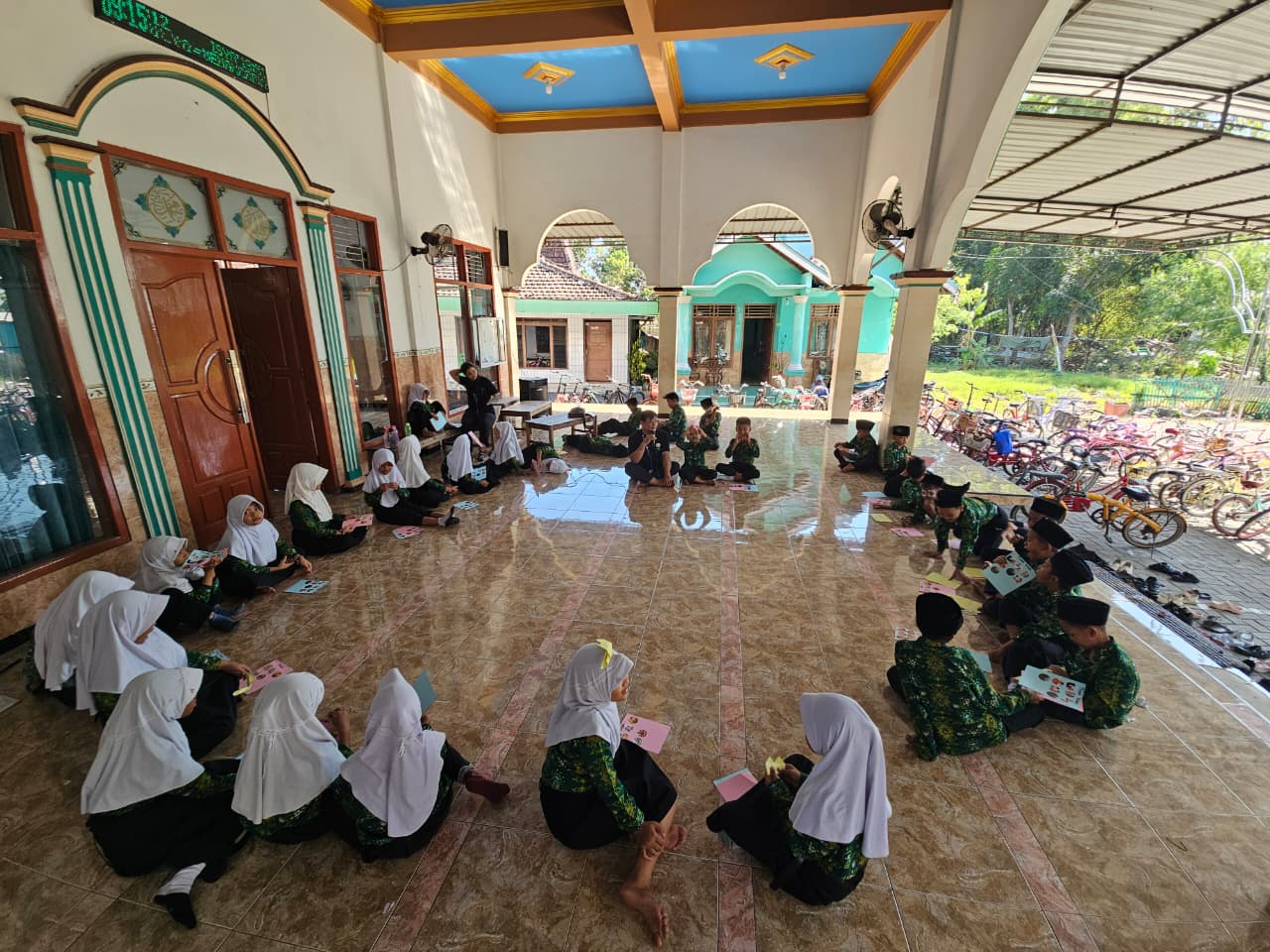
To maintain fun situation, the activity presented games before the post-test that contained six questions in order to see how far children understood.
To close the activity in class-3, all participants clapped following "Totelala." Claps and happy faces filled the room, which marked the end of the activity.
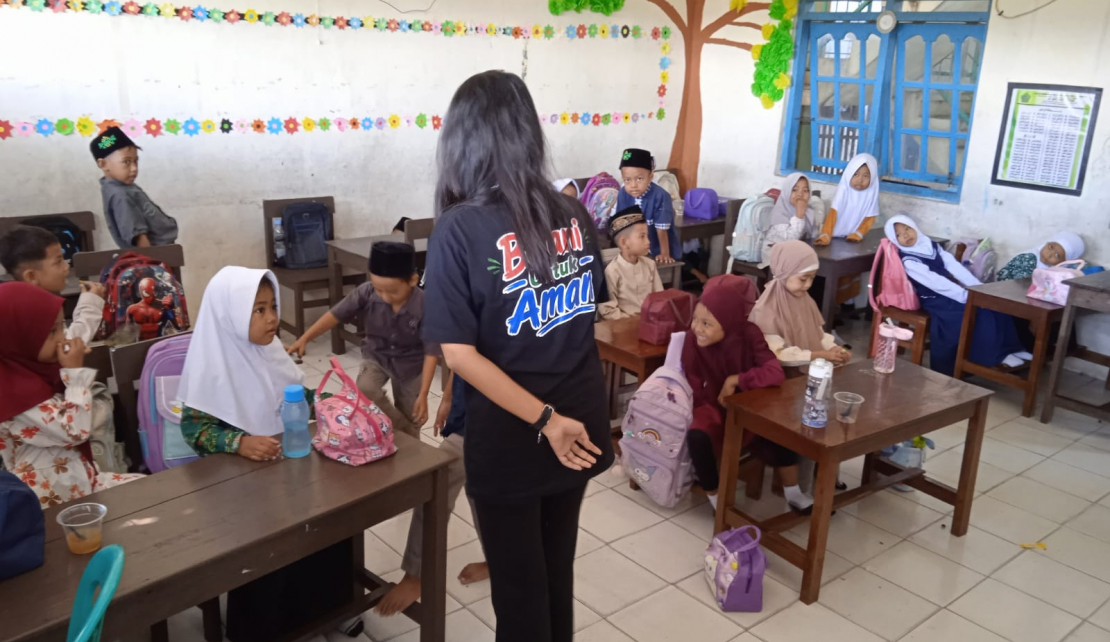
Meanwhile, in class-1, facilitators Tina and Yosi asked children to identify body parts that could and could not be touched by other people as part of education on self-protection. In the session, a number of children used terms that were not really correct when pointing to reproductive organs. The facilitators then corrected by introducing the correct and appropriate terms - penis for boys and vagina for girls – so that children got used to using the correct terms.
Then, they asked children to discuss habits of using mobile phones, types of online games they often played, and their understanding of the internet. From there, the facilitators explained the benefits and risks of using the internet, including the importance of identifying touches that were allowed and not allowed, and understanding that not all people who looked kind/good had good intention. The activity ended with children sticking stickers of lessons they learned, Totelala clap, and brief reflection.
When asked what they learned that day, children were able to mention materials they received as sign that they understood the key lessons about self-protection.
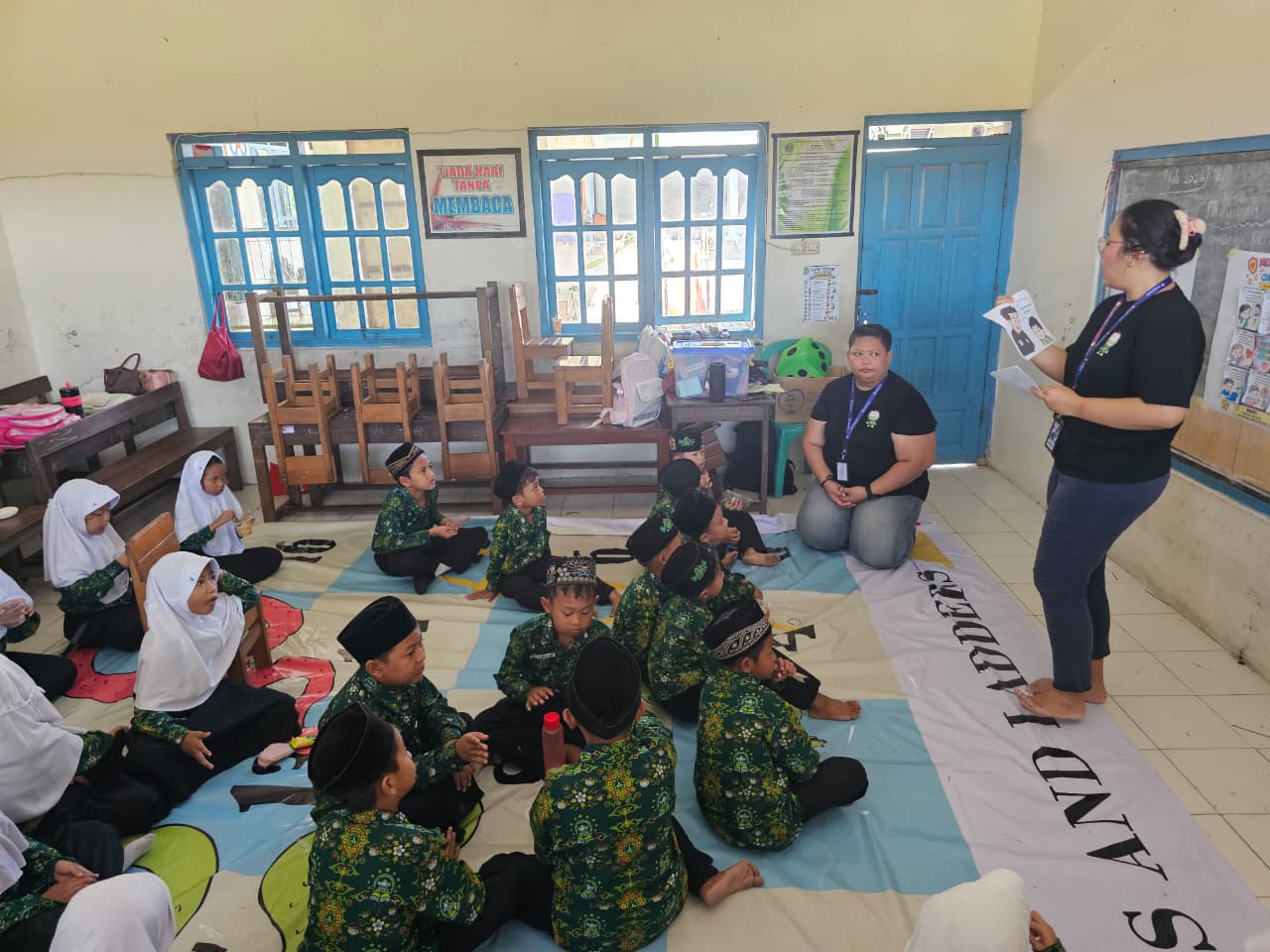
A different situation was observed in class-2. The activity revolved around snake and ladder game designed to introduce the concept of safe culture and prevention of child grooming in a fun way. During discussion in the game, the facilitators found that a number of children had used mobile phones and were familiar with a number of digital platforms, such as Roblox, Free Fire, and TikTok.
Yet, they were not familiar with the risk of child grooming that could happened online. After the game, children engaged in a game of poster colouring on the theme of safe culture. Each participant received a piece of paper with drawing that they had to colour, and then explained the content of the poster before they attached the poster unto the classroom walls.
The facilitators continued with each explanation about each poster so that children could understand. Through interactive discussion, children identified ways of self-protection when using the internet and the importance of confidence when telling parents or trusted adults about situations they found unsafe. The activity closed with Totetala claps by all participants.
Lessons proceeded through puzzles, coloured papers, movement games, and snake and ladder drama. Yet, the key message was that: each child had a right to feel safe, to be listened to, and to be protected, in real world and in digital world which became more and more familiar to children.
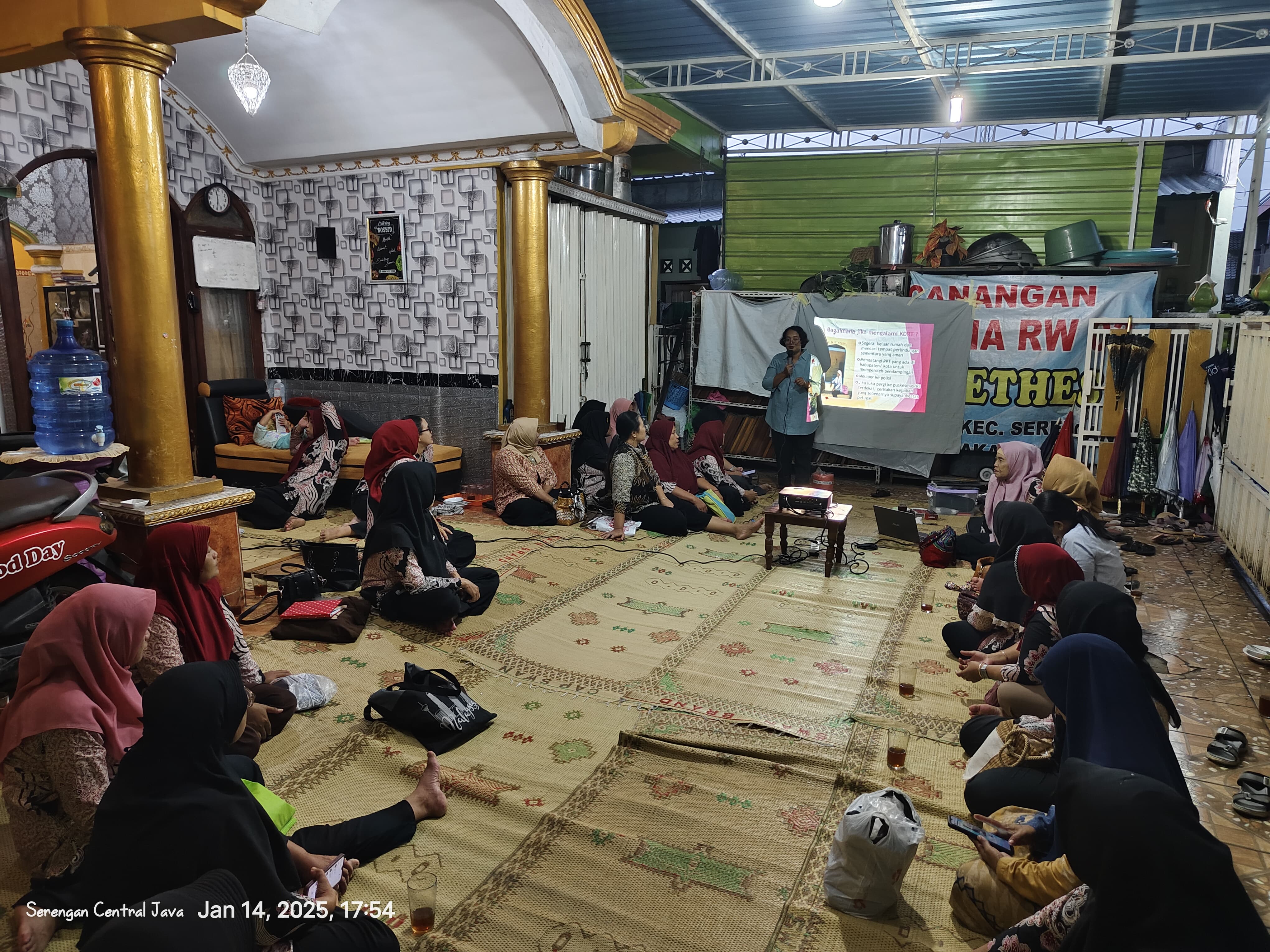
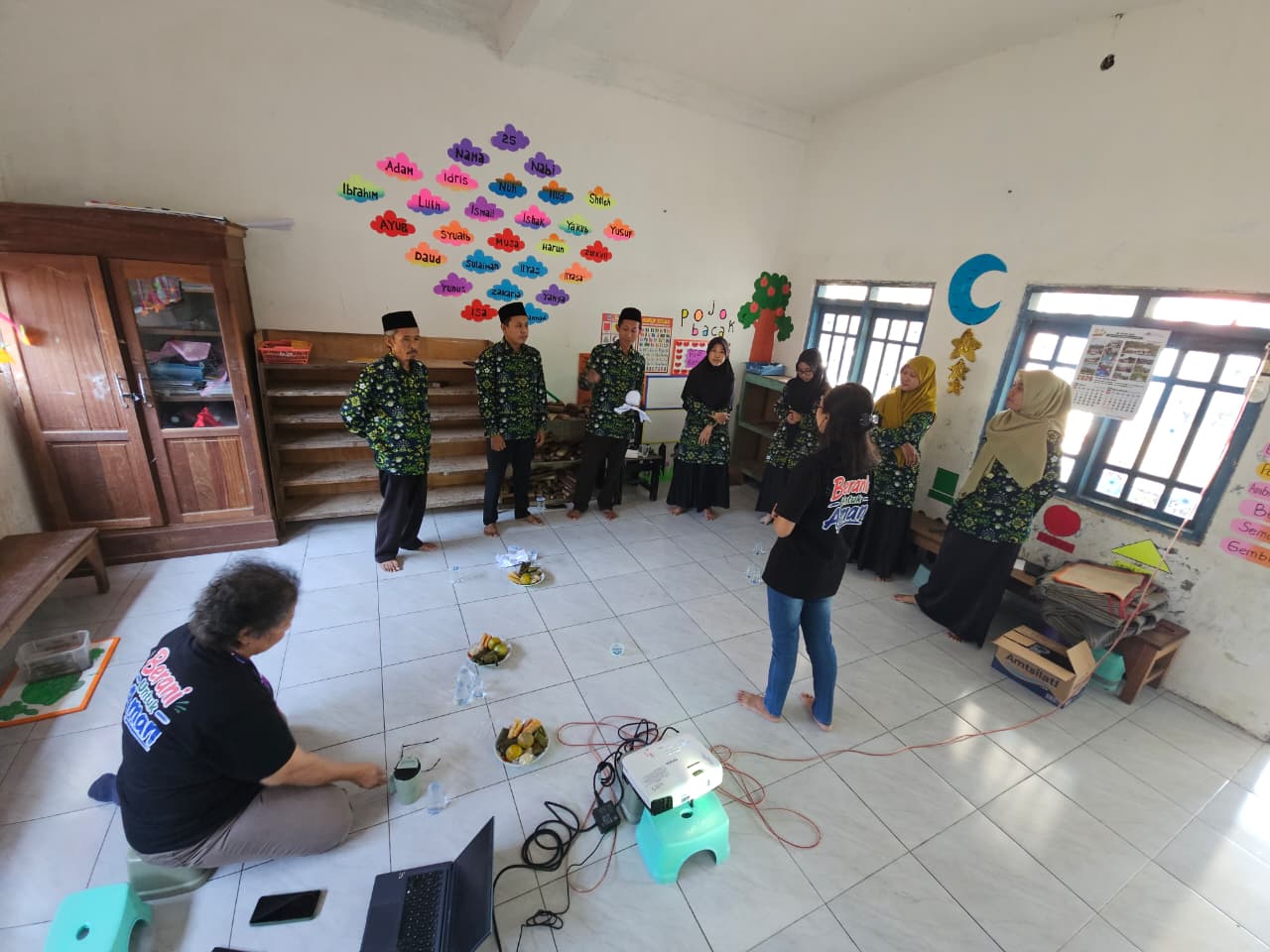
At the far end of the room, teachers, tutors, and staff of MI Miftahul Huda attended legal education sessions on basic gender, child’s rights, and child protection facilitated by Haryati Panca Putri and Dorkas Febria.
The activity was interactive and communicative, that triggered participants to pay attention, and to actively discuss and share experience they found at school environment. The facilitators presented a number of simple, interesting and easy-to-understand education media to help children understand the concepts of gender equality, children’s rights, and the importance of creating a safe and free of violence learning environment.
Through warm discussion, participants identified the roles of educators in preventing discrimination, violence, and forms of infringements of children’s rights. The situation became fluid and made the learning process fun and encouraged students to have the confidence to express opinions and to ask questions. The expectation was that the materials could be practiced on daily activities in order to create friendly, inclusive and safe environment for children. (Ast)