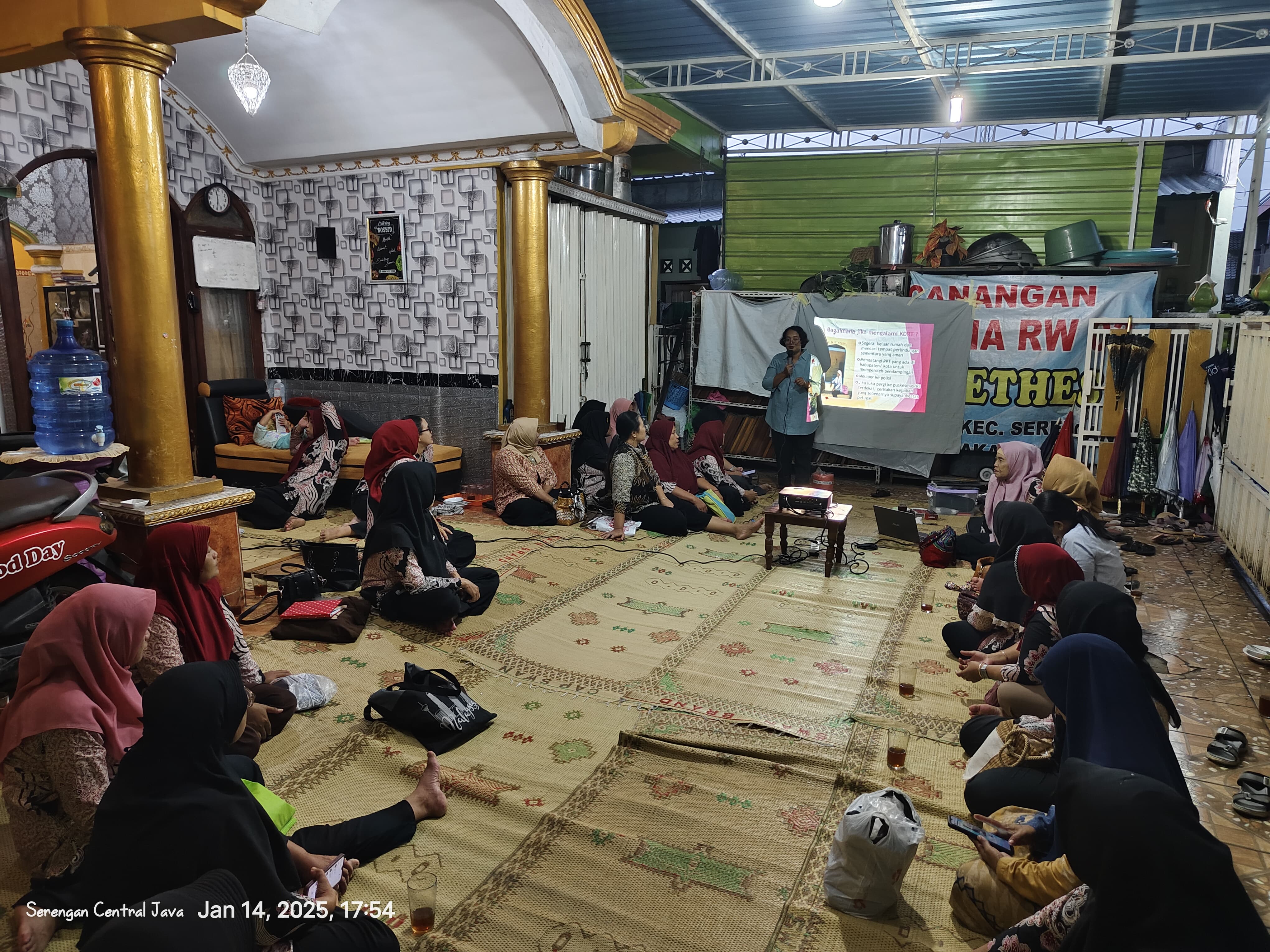
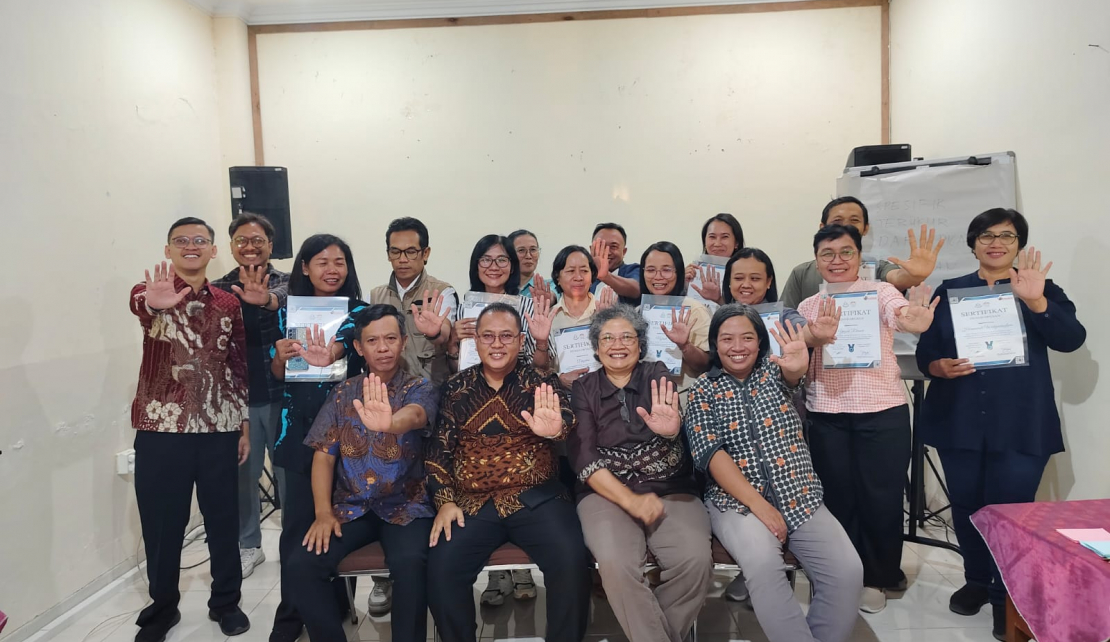
Churches within Wonogiri Classis Prepared Standard Operation Procedure for the Women and Children protection, 15 Task Force Members received their Certificate

Churches within Wonogiri Classis Prepared Standard Operation Procedure for the Women and Children protection, 15 Task Force Members received their Certificate
The executive board of Wonogiri Classis conducted training and discussion on Standard Operation Procedure and Ethical Code for Women and Chldren Protection Task Force in conjunction with Yayasan YAPHI, at Anawin Hall Yayasan Yaphi on Saturday, 25 July 2026. The activity was the final series in accompaniment program that started in June 2025.

Fifteen of twenty participants enrolled – priests, church board members, and Children and Women Protection Task Forces within the churches in Wonogiri classis – in the meeting with Yayasan Yaphi facilitators.

The director of Yayasan YAPHI, Haryati Panca Putri extended her gratitude for the one-year joint learning with Wonogiri Task Force. She showed data and field experience in case management of violence, including cases where children and people with disability were victims, and the social media-based violence.

“The trust that the Churches gave to the Task Force necessitated professionalism and caution in any case management,” stated the key message of the session.
Image

Discussion – Chapter One of the Standard Operational Procedure


The key agenda of the activity was the discussion of standard operational procedure document on Prevention and Management of Violence against Women and Children. That day, the forum managed to finished the discussion on Chapter One – general provision, that included background, aim and objective, scope, and implementation principles.

One key agreement at the activity was a confirmation that people with disability were inherent part of the protected vulnerable groups. He forum also agreed to continue using the term “vulnerable groups” and not change it into “high-risk groups,” as it was more appropriate and not broaden the meaning.

The scope of the Standard Operation Procedure was broadened to include education units such as public schools and Islamic schools, and digital communities such as online discussion groups, which potentially became new space for violence to occur.
Meanwhile, a small team would continue the discussion of the subsequent chapters - the legal framework, procedure for case management, ethical code, partnership, and concluding provision, before the final result would be re-sent to all participants for final review.

Presentation with regards to Prevention and Management Flow


In addition to discussion on standard operational procedure, participants broke into two working groups to present the results of group discussion. The prevention group prepared the flow that started with mapping of areas vulnerable to violence, information dissemination and education involving local neighborhood, youth groups, youth integrated health posts, family welfare groups, schools, and students’ parents.

The management group presented the flow from report submission, case identification, assessment of victims’ condition, coordination with relevant parties such as the police, community health centres, and psychologists, and evaluation of results.
The discussion was quite in-depth when two groups had different views with regards to the definition of the word “accompaniment”, whether it was limited to accompanying victims to service facilities, or it included the whole process until victims got justice and rehabilitation. The forum agreed that the standard operational procedure preparation team would look further into the definition in order to avoid misunderstanding at later time.

Reflection and Action Plan


Towards the end, participants reflected on the changes they felt after attending the training series on women and child protection task force. A number of participants acknowledged that they became more patient and kinder towards children, and more sensitive towards signs of violence in their environment and in social media, and no longer saw children as objects but rather as individuals that they accompanied with empathy.

The forum also prepared a number of action plans, including information dissemination with regards to women and child protection task force at classis level and local churches, completion of the standard operational procedure documents, formulation of vision and mission, consolidation of management, to scheduling education on prevention of violence on a regular basis to church members and people in general.

Certificate Presentation


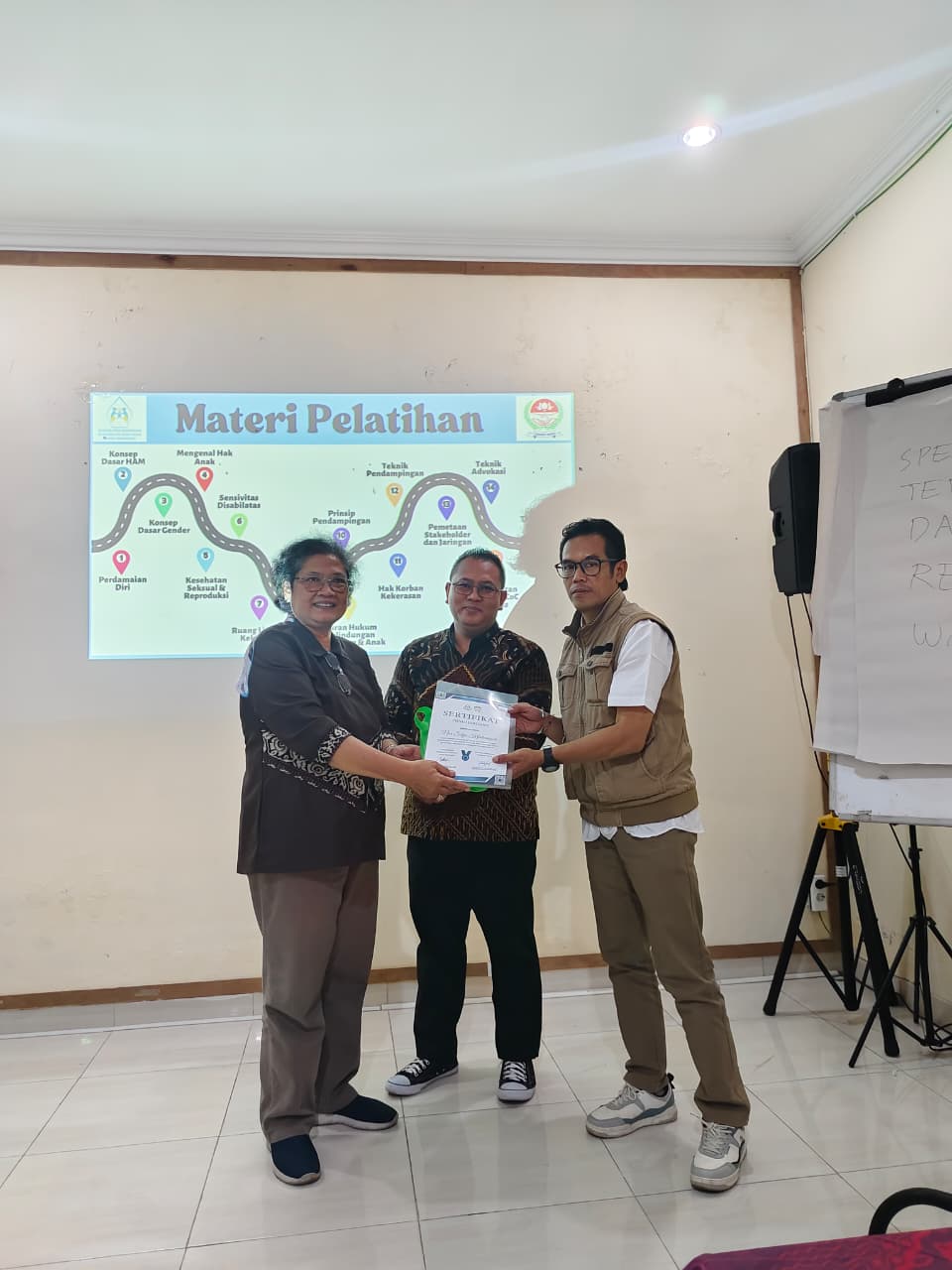
The activity closed with symbolic certificate presentation by Putri and the local priest to participants’ representative after finishing the 16 training sessions.

In the closing session, representative of Classis Executive Board expressed their gratitude for the accompaniment in the last twelve months, and stated that the end of the training was not the end of services, rather the beginning of the Women and Children Protection Task Force to continue its focus on vulnerable groups in Wonogiri District. The activity ended with a prayer and a photo session. (Yoh. Handharu Pratistha)