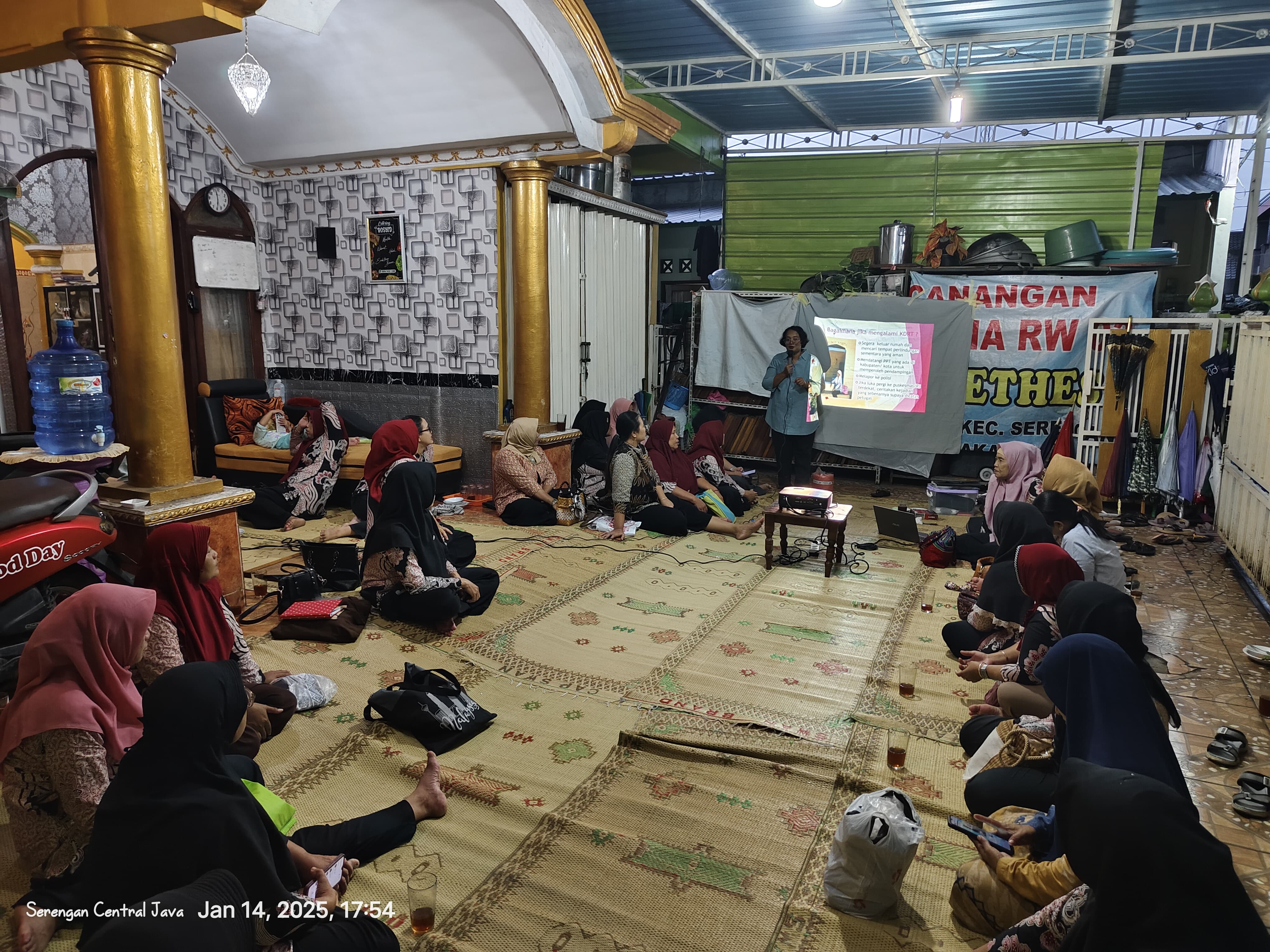
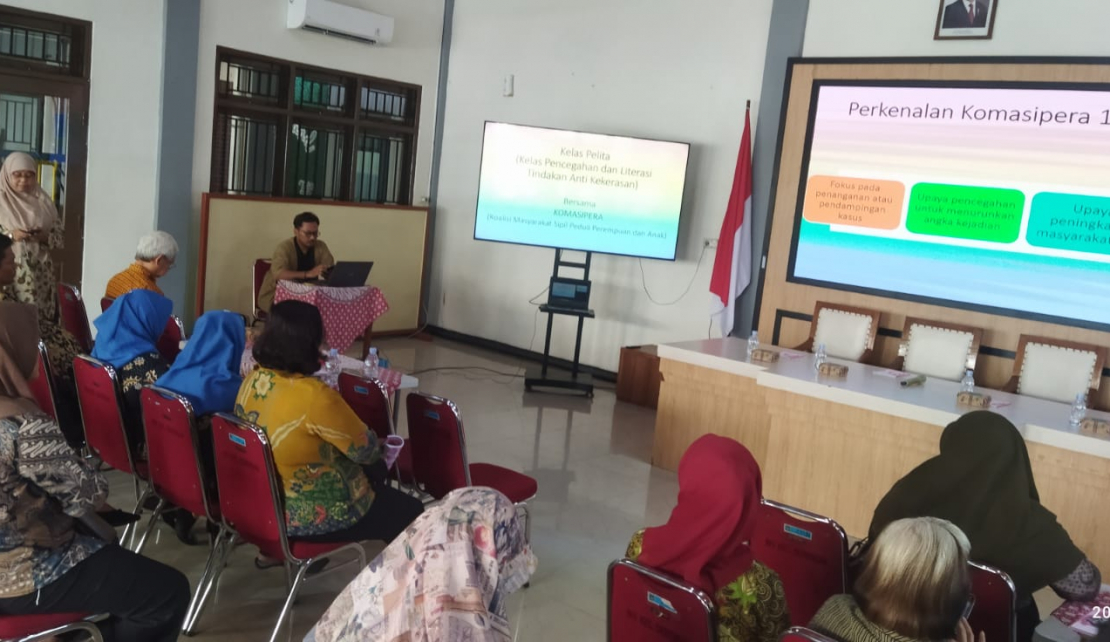
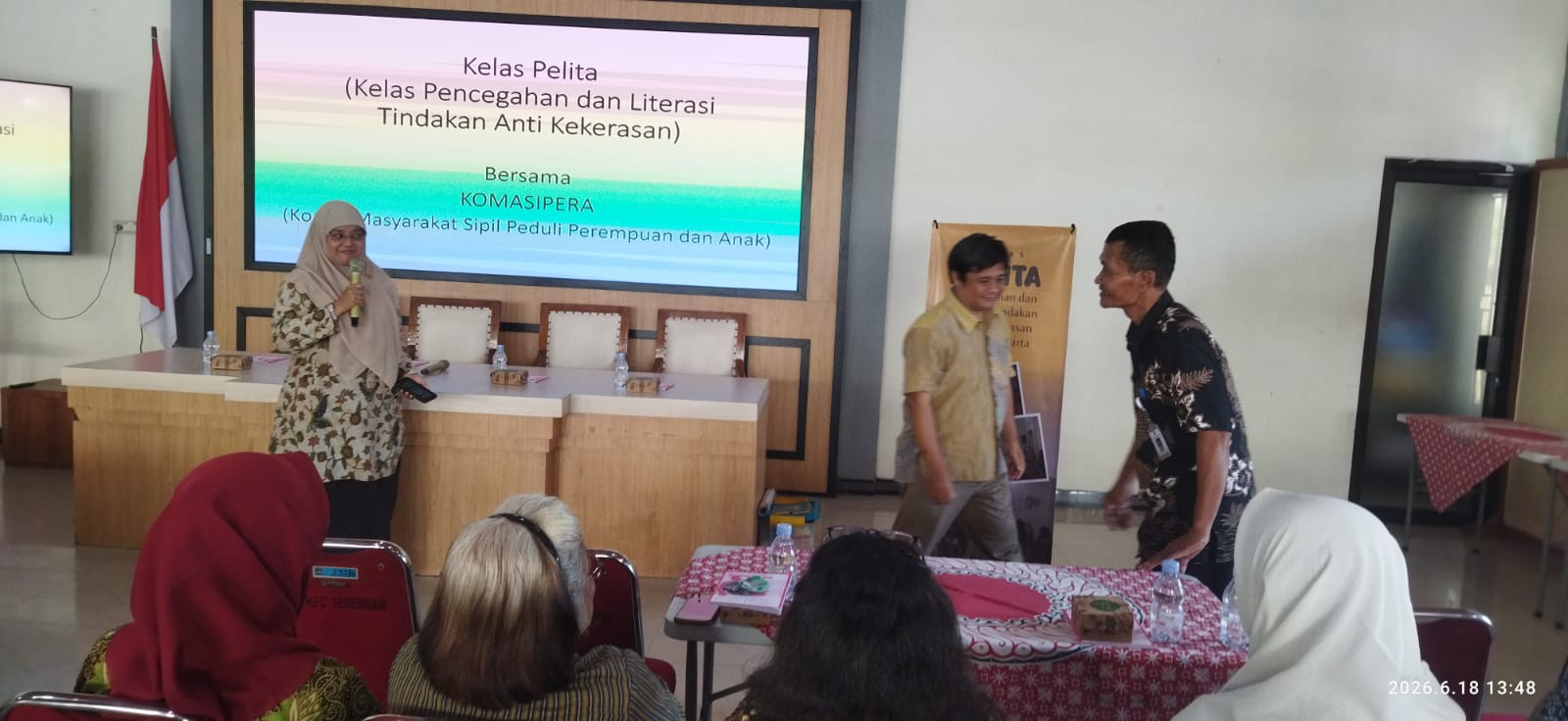
Who am I? Where did I came from? What is the purpose of my life? And What is the final destination of my life?
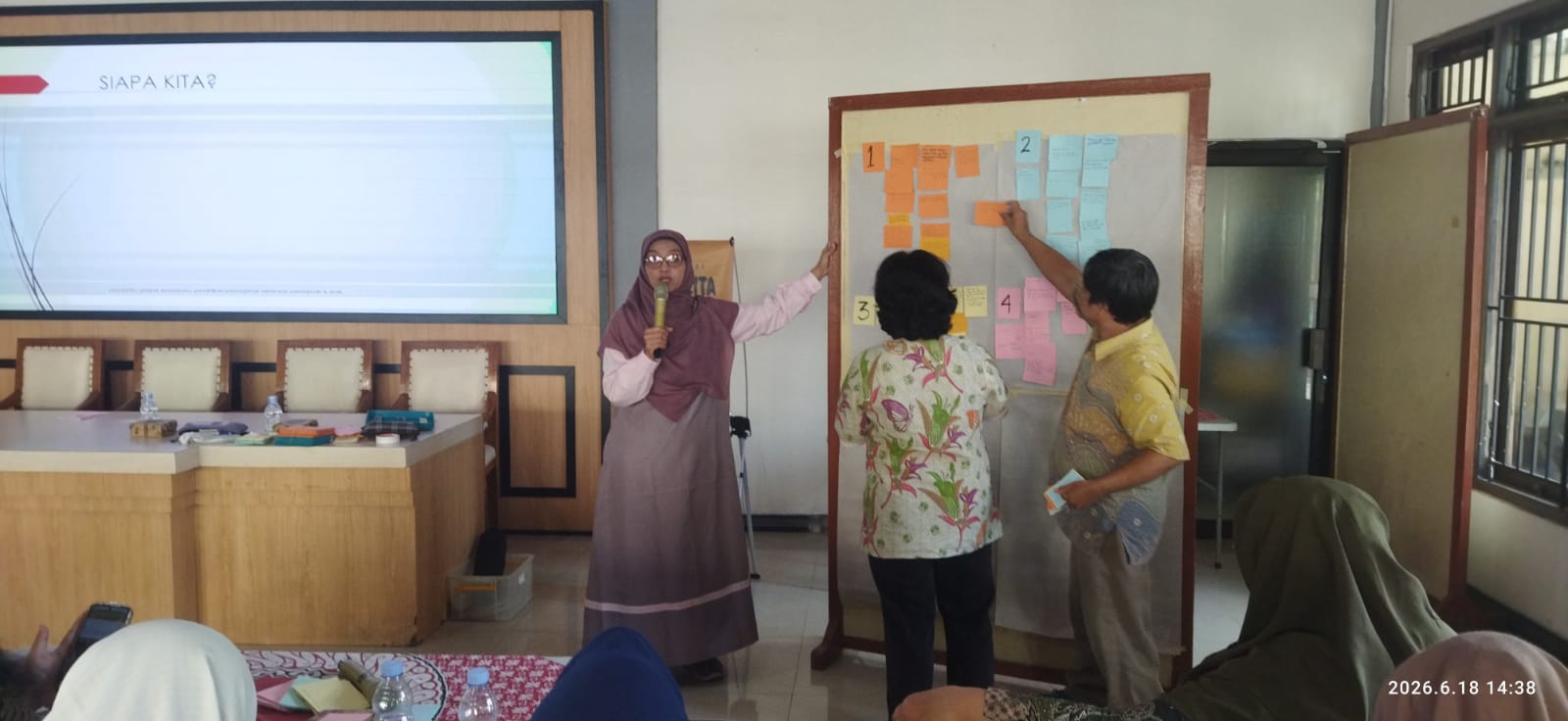
The room was initially silent. But slowly participants wrote their answers.
When the results of the reflection were read out, it was obvious that most participants saw themselves as God’s creation.
Some participants wrote that humans were social beings that had to adapt and to lie with other people. There were also participants who described themselves as imperfect individuals and had to continuously learned to make themselves better.
Some participants viewed human’s origin from the point of religion. They wrote that humans came from earth, from semen, born to a mother, and essentially were God’s creation.
The answers tended to be diverse when participants were asked to explain the purpose of life.
Some wrote that life was opportunity for prayer and carrying out God’s commandments. Others wanted to be useful humans for others. Still some others wanted to make their family happy, to educate children, to enjoy life with gratitude, and to improve oneself from time to time.
It was interesting that most participants had similar answers when asked about the purpose of their life. Most wrote that they wished to return to God and enjoyed life in heaven.
Some scribbled simple expectations: Go to heaven. Some added that before reaching that final destination, they wanted to make sure that their children were successful in this world and in heaven.
For Vera, the reflection was critical because many people lived their day-to-day life without really taking time to ask what the purpose of their life was.
"WE are so busy with work, manage the household, manage the family. Then we realise it is already late at night, and tomorrow we repeat the same routine. It was rare that we gave time to ourselves to ask what was the real purpose of life," she said.
Three Human Capitals
From such reflection, Vera then asked participants to understand three key human capitals.
The first was the physical – the need for food, drink, sleep, and health.
The second was instinct. Vera said that humans had instinct for self-defence, love, reproduction, and spirituality.
The third was mind, that separated humans from other creatures.
"Mind helps human to think, analyse, store knowledge, and differentiate good from bad," she said.
Vera suggested that many social issues, including violence, were rooted in unmet basic needs or basic needs that were satisfied in the wrong way.
She gave an example of the need for love which was not fulfilled in children. When children did not get the attention, touch, time together, and positive words from parents, the impacts would have significant influence on the development of their concept about themselves.
Conversely, when the need for love was fulfilled, children would become self-confidence and had positive view about themselves.
Developing Positive Concept about Self
The subsequent discussion focused on the concept of self. Vera explained that the concept of self was a way for a person to see, judge, and imagine him/herself.
Many factors influenced the concept of self – from life experience, family parenting style, social environment, culture, physical condition, and social media.
She said that a person with positive concept of self tended to accept his/her strength and weaknesses easily. They would not be swayed by negative assessment/views that other people made and were ready to meet life’s challenges.
Conversely, negative concept of self often made a person offended easily, lose self-confidence, and find it difficult to grow. For that reason, Vera asked participants to start making peace with themselves.
One way was to accept their weaknesses, to forgive their past mistakes, to build positive affirmation, to make realistic targets, and to avoid the habits of comparing oneself to other people.
"We do not need to compare ourselves to other people who seem to have a perfect life in social media. What is important is to know oneself and to be grateful of what one has," said Vera.
Small Steps to Make Big Changes
By the end of the session, participants submitted their simple yet honest evaluation.
One participant asked that the subsequent meeting be more relaxed and not rushed.
"Do not be so tense, next time just relax," said the participant followed by other people’s laugh.
Yet, the first meeting of Sekolah Pelita showed that prevention measures for violence could start from small basic things: know oneself.
With increasing exposure of violence cases against women and children in public spaces, Komasipera chose to start from the root problem. It was not just about teaching how to help victims, but also to help community understand humans, relations, and neglected basic needs kebutuhan-kebutuhan dasar yang sering kali terabaikan.
Because before one could protect others, one had to be able to know oneself. ( Ast)