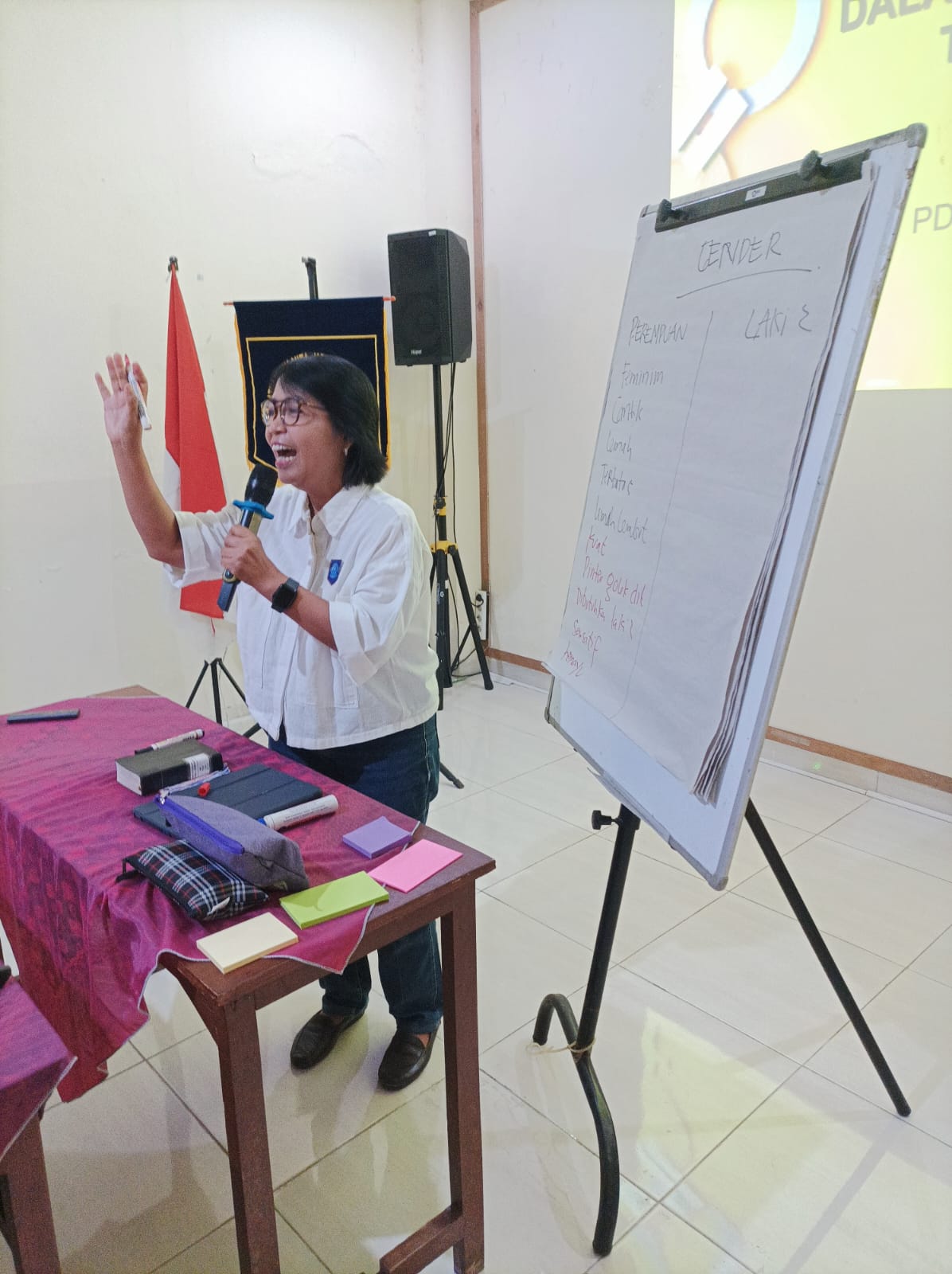
Ratih also paid attention to the impacts of gender ideology passed down from generation to generation. She believed that stereotypes were continuously reproduced leading to injustices against women and men. Women often experienced marginalisation and multiple workloads as they had to take of their household while at the same time worked in public spaces. On the other hand, men were had social expectations to always be strong and not showed emotional vulnerability.
As a result, individuals not fit with the prescribed social standard often experienced pressures, even became targets of harassment. “Gentle men are often bullied, while firm women are not fulfilling their expected roles,” said Ratih.
In the presentation, she also revealed that gender injustices still appeared in many aspects of life, from access to education, technology, economy, to political participation. Even in day-to-day life, women often lost their personal identity because they were known as somebody’s wife or of a particular family, rather than own their own merit.
Ratih added that education institutions and a number of cultural products often, unintentionally, perpetuated gender stereotypes. Textbooks, pictures in curriculum, to social habits often presented role division between men and women. This situation then formed community’s view early in their life.
For that reason, measures to establish gender justice had to start from people’s point of view. Critical understanding of social construction would help communities see that capacity, leadership, responsibility, and tenderness were not typical only of a certain sex. These values could grow and develop in every human, both men and women.
Identifying Gender Injustices in Church Life
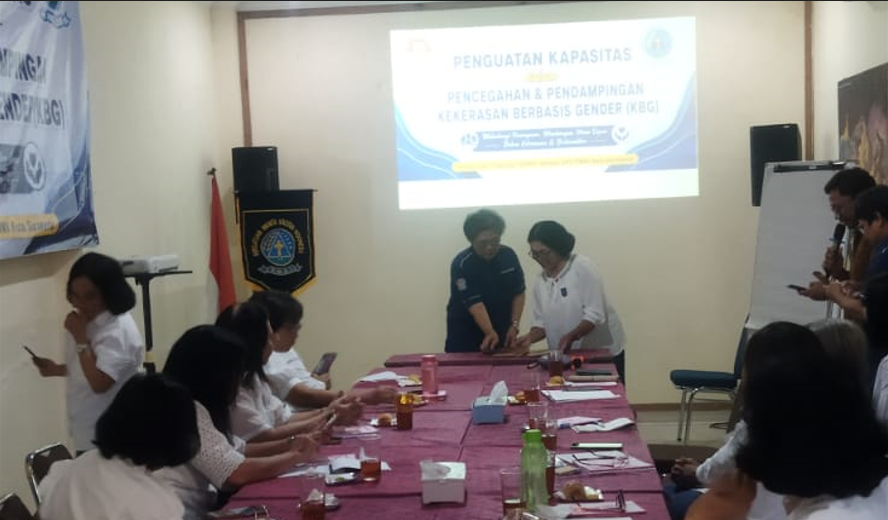
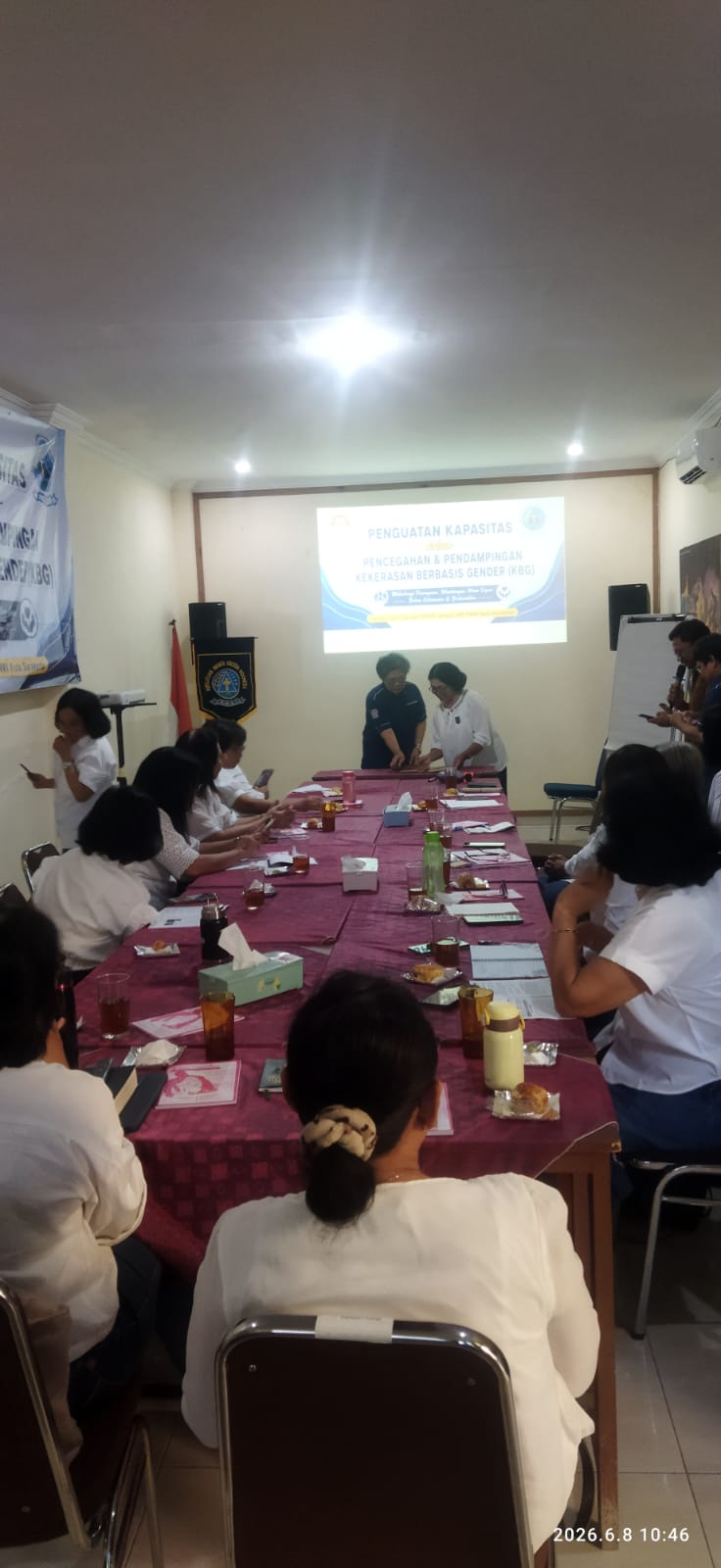
After the presentation on gender and theological perspective, participants reflected and discussed in groups. In this session, they were asked to identify forms of gender injustices found in churches and in day-to-day services.
Nurul Sutarti opened the discussion by asking participants to remember the interpretation of the Bible often used in the Churches. She gave an example of chapters often quoted in marriage context, specifically with regards to the relation between husband and wife. She iterated that people often had narrow understanding of a number of the Bible texts and they used that understanding to support unequal relations when they did not read it fully and within the right context.
Participants then discussed their own experience. Each story and viewpoints started to come out.
One participant explained how traditional view of women’s roles remained entrenched within families and churches. She said that she argued with her family because of viewpoints that women had to be in the house, while men had space to do activities outside the house.
Other participant described her experience when she was involved in a committee to build a church. Although she had enough knowledge and experience in construction, other people did not consider her inputs seriously. She felt that people doubted her capacity just because she was a woman.
“When I gave my inputs on the design of the building and access to rooms, the responses implied the view that women knew nothing about the technical aspects of construction,” she said. Her experience made her reflect that gender bias not only happened in household setting, but also in decision-making setting in churches.
The discussion also touched on women’ leadership issue in churches. A number of participants believed that there remained tendency amongst church members to accept male priests rather than female priests. This kind of stereotyping often influenced the way members viewed women’s capacity and authority in church services.
One person involved in accompaniment of violence cases added that it was critical for priests and pastoral counsellors to understand gender justice. A number of cases of violence in the domestic domain required sensitive handling of victims’ experience, particularly when victims’ safety was at dire situation that threatened victims’ life.
By the end of the activity, Yosi explained that the materials for the subsequent meeting would focus on the roots of gender-based violence. Meanwhile in session three, participants were led to understand the phenomenon of online gender-based violence and learned basic techniques to accompany victims.
The activity closed with written evaluation. Participants wrote new knowledge they gained and inputs for future training. As she wrapped up the training, YAPHI director, Haryati Panca Putri reminded that changing viewpoints necessitated a long process. Yet, through joint study spaces, participants were expected to use “a new lens” to understand the relation between men and women in a more just, equal, and humane manner. (Ast)