Do We Our Independence Yet? Reading Human Rights from Day-to-Day Life

Do We Our Independence Yet? Reading Human Rights from Day-to-Day Life
The question about human rights appeared in many discussion rooms. People talked about rights, justice, equality, freedom, and protection. Yet, not all people had the opportunity to stop and ask: what were human rights and why understanding human rights were critical in daily life?

That question became an entry point to session about lesson on human rights presented by Haryati Panca Putri, or known as Putri. She asked participants not to go straight into discussion about laws, legal articles or articulations. The lesson started with something much closer: to know rights inherent in people’s life.

Putri placed the Pelita Class initiated by the Civil Society for Women and Children or Koalisi Masyarakat Sipil Peduli Perempuan dan Anak Surakarta (Komasipera) – a community of civil society organisations and individuals who cared about the City of Surakarta – as a joint learning space. No position was higher or lower amongst presenters and participants. What distinguished them was the knowledge background and experience.

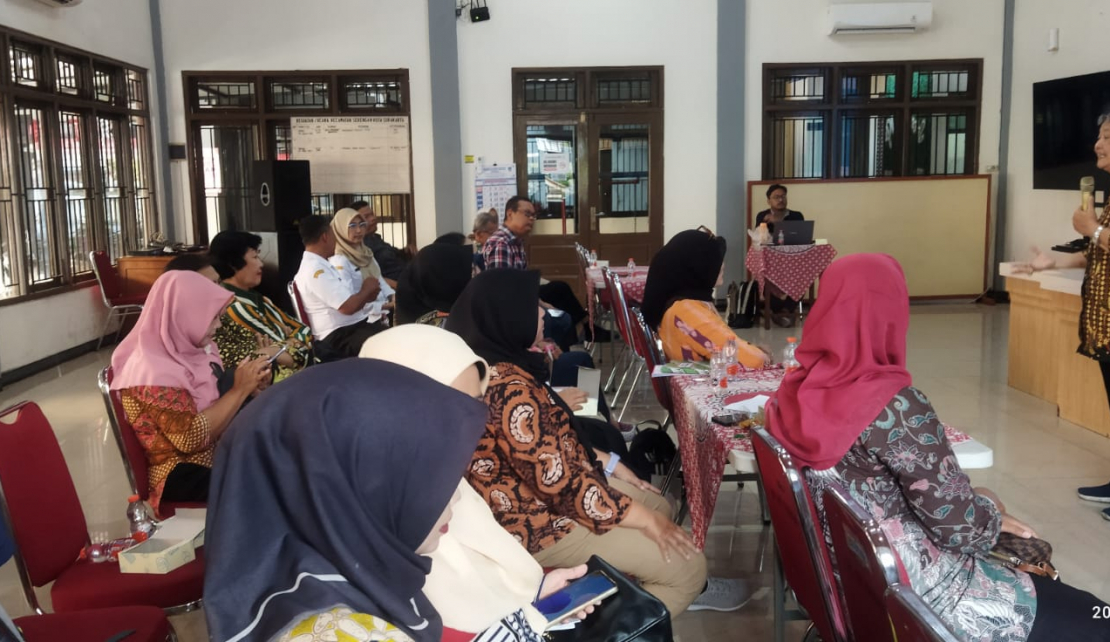
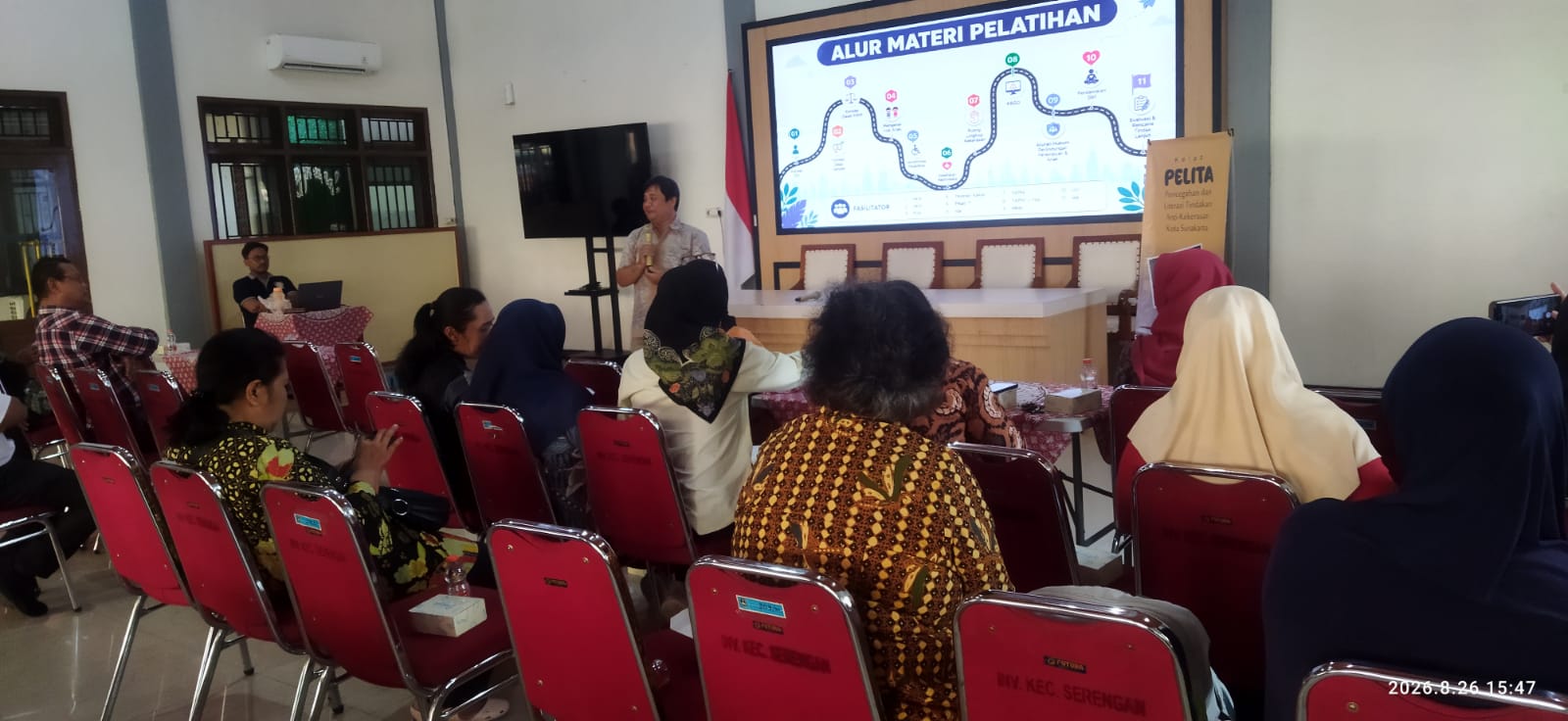
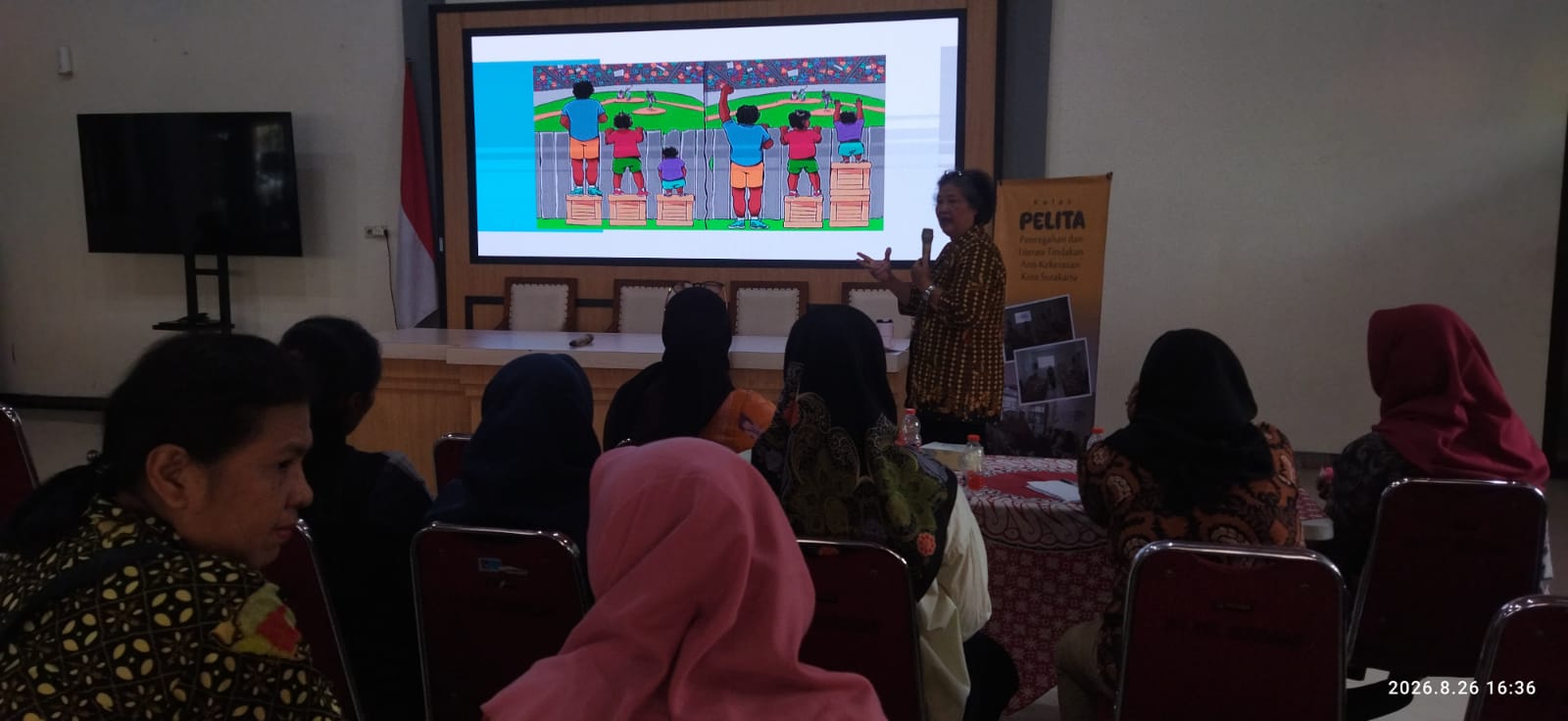
“Pelita is a joint learning space,” she said in front of 25 participants in Pelita Class Third Session at Serengan Sub-District Hall, Wednesday (26/8).

For Putri, understanding human rights was critical so that a person understood his/her rights, and to be able to respect other people’s rights. Human rights were integral in each person since birth. The rights were natural, universal, indivisible, and irrevocable.

Each person was born equal. For that reason, ethnicity, religion, race, sex, and social status should not become reasons to treat people differently. Yet, such principle was not always easy to practice in daily life.

People could make a difference from the nearest (local) environment. In a family life, for example, parents could compare their child to another child. Sons were treated differently than girls. Smart children were treated differently than their siblings.

People thought that such treatments were normal. Yet, Putri argued that the habit to treat people differently or to compare one person from another person could reflect a person’s view about respect for human dignity. Understanding human rights became critical as people needed protection from arbitrary treatments. Violence, discrimination, insults, and acts that denigrate other people were issues associated with human dignity.
Talked about her organisation’s experience accompanying in Solo. In one month, there were a number of cases of violence that her organisation accepted to accompany. That experience showed that violence was not far from people’s life. She reminded participants who work as motivators in their respective area to understand the human rights concept well. The knowledge was necessary when coming face-to-face with cases of violence and legal issues.

For Putri, human rights provided the basis for people to ask questions when they faced injustices. Why certain acts were committed? Why a person was treated differently? Why the State did not provide protection? And to who should the problem be referred to? Those questions were critical parts of advocacy work.
Image
Image

Independence That Had to Be Re-examined


Discussion about human rights then touched on the meaning of independence. The 17-August momentum gave Putri an opportunity to aske participants to make a reflection.

Each year, when celebrating the Nation’s Independence Day in the community, she often wore a T-shirt with a simple message: “Are we independent yet?” That question was not meant to ignore the significance of Indonesia’s independence. On the contrary, that question was a way to see whether independence was truly alive in people’s day-to-day life.

If communities still found it difficult to meet their day-to-day needs, to get protection, to have their dignity ignored, or to have their due rights, then the meaning of independence had to be re-examined. Within the context of human rights, the State had three key obligations – to respect, to protect, and to meet people’s rights.

The State had to respect rights without committing acts that infringe on personal rights. The State had to protect communities from acts of infringement by other parties. In addition, the State had the obligation to take steps so that communities were able to enjoy their rights. The three principles were important when communities came face-to-face with law and State policies.

The Right to live to the Right to Express Opinion


Putri then asked participants to identify a number of basic rights that each human had. One such right was the right to live. Each person had a right to live and did not need to lose their life arbitrarily. That right to life was not something that could be decided by one person upon another person arbitrarily.

There was also right to express opinions. People had the freedom to express their aspiration, including through protests. Yet, such freedom had to also consider responsibilities to respect other people.

The rights to a religion and to practice religion were part of basic rights. Each person had the freedom to practice their faith and other people had the obligation to respect that right. Participants were encouraged to understand their political right, the right to elect and to be elected, the right to gather and to unionise, the right to establish or to join an organisation, and the right to participate in public life.

With regards to the socio-economic aspects, there were rights to work, to get an education, to get health services, and to get social security. Education, according to Putri, had to provide safe space for children. Children-friendly schools should not be seen only as a program or a symbol. Schools had to be a place where children’s rights were respected.

The same with a house. A house was not simply a building. A house had to be a safe space for those living in it. The concept of safe space also applied in work places, schools, communities, and community environment.

When Victims Were Being Blamed


Human rights issues became more complex when dealing with vulnerable groups. Children, women, people with disability, and elderly needed special protection because they were in situations that increased their risks when experiencing violence or discrimination.

Putri explained the experience of accompanying a woman and her child with disability who experienced sexual violence. In that case, the victim was stigmatised anf was blamed for the child’s condition. That kind of view showed that human rights issue was not simply about laws. They were also related to paradigms in the communities.

If communities believed that the victim(s) was (were) to blame, the process of justice became even harder to achieve. A similar problem happened when a victim came face-to-face with the law enforcement agencies. Putri told of her experience accompanying a victim of sexual violence that was asked very sensitive questions.

The leading questions increased the wound and led to victim feeling blamed. In such a situation, understanding of human rights perspective was critical, especially for law enforcement agencies who dealt with such issues. Each person had the right to equal treatment in law and to know where they could lodge a complaint. Understanding of human rights also meant availability of mechanism to deal with infringements.

Putri mentioned a number of institutions where communities could lodge their complaints, such as the National Human Rights Commission, National Women’s Rights Commission, the Ombudsman, and other relevant State Institutions. She told of people’s experience with disturbance in their local environment in the aftermath of development activities. Complaints could be lodged via different government levels of structure, starting from local neighbourhoods, hamlets, villages, sub-districts to district governments. Yet, the problems did not get addressed.
When complaints were brought to the Ombudsman, different responses might be evident. The complaints might be immediately acted upon and the complainers (the people) got their solution. That story showed that communities had to be familiar with the official complaint channels. When one mechanism did not work, there would be other institution(s) they could make use of that had the authority for the issue they faced.

Knowledge That Changed View Points


The learning session did not stop at introduction of human rights terms and principles. Putri expected that the knowledge the participants gained would influence their view points about daily life. When someone understood that each human had equal dignity, His/her view about their neighbours, children, victims of violence, people with disability, and other groups would also change.

Knowledge could lead to new paradigm. Paradigm then influenced attitudes and behaviours. For that reason, lesson about human rights had to continue. It was not simply for those working in legal or advocacy issues, but also for communities who faced social issues.

At home, in schools, work places, communities, and governments, respect for human rights started with simple acts – not to discriminate, not to belittle, willingness to listen, respect for other people’s choices, and confidence to question injustices.

The question “Do we have our independence yet?” then found its broader meaning. Independence was not simply talking about the Nation’s history, but also about how humans lived in dignity.

"When someone can live safely, have education and health, express opinions, practice their faith, receive equal treatment in law, and free from violence and discrimination, that is where human rights become real in daily life, " said Putri. She reminded that human rights were not simply materials highlighted in books or in legal documents. Human rights were alive in how humans treat fellow humans. (Ast)