“Sensitivity to Disability” – the Training Theme for the Task Force for the Prevention of Violence, Wonogiri Classis

 “Sensitivity to Disability” – the Training Theme for the Task Force for the Prevention of Violence, Wonogiri Classis
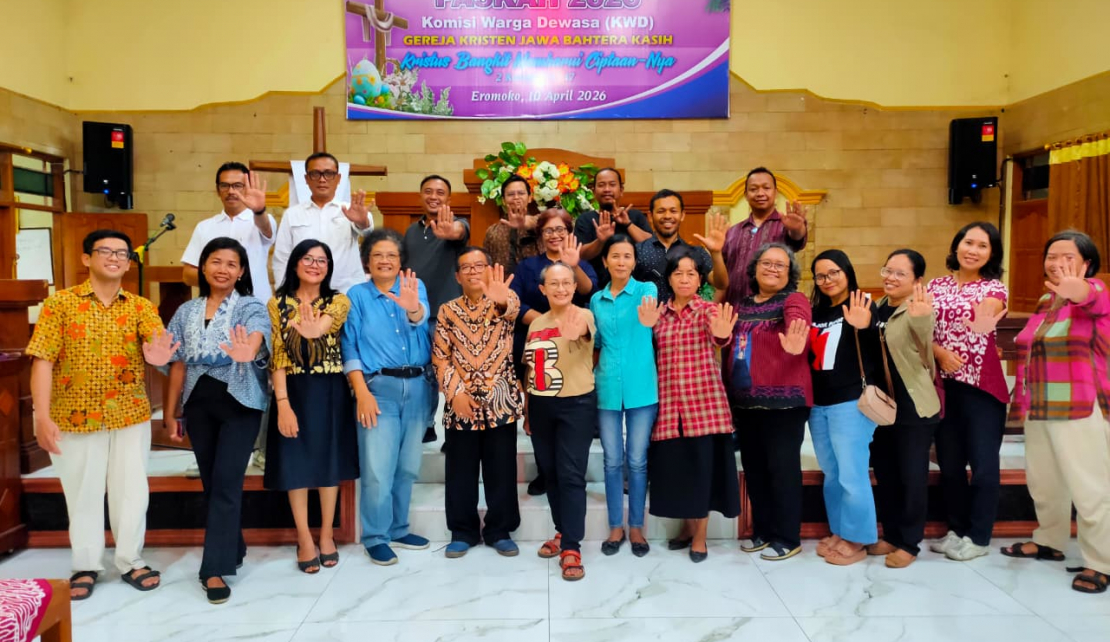
On Saturday, 25 April 2026, Yayasan YAPHI continued its commitment to build community capacity through legal education and training. The training at Bahtera Kasih Church in Eromoko targeted the Task Force for the Prevention of Violence against Women and Children within Wonogiri Classis. The training was the ninth session of a planned total of 13 legal education sessions, with 18 participants from a variety of localities.

The training theme was sensitivity to disability – a theme designed to consolidate participants perspective on disability issue as key part of prevention of violence. The director of Yayasan YAPHI, Haryati Panca Putri opened the training session by explaining the variety of activities which the organisation did, including accompaniment of people with disability.
She explained that YAPHI was active in policy advocacy through, for example monitoring the city regulation on people with disability in Surakarta – Regulation No. 9 Year 2023, and its implementation directives. In addition, YAPHI was also involved in consolidating civil society network through establishment of Solo Inclusion Vision network (Jaringan Visi Solo Inklusi) under the coordination of Sunarman Sukamto and Pamikatsih. The network had important role in promoting accessibility in disability-friendly public and inclusive advocacy policy.

The results were visible, for example in Manual for Disability-Friendly Accessibility in Surakarta city, and the preparation of disability advocacy book by Jaringan Visi Solo Inklusi.

Astuti delivered the key session about sensitivity to disability. She opened the session by presenting a clip of a film “The Greatest Showman” about the journey P.T. Barnum took to increase the self-confidence of a group of people with disability through arts show. The film served as an entry point to discuss perception of disability that started with charity-based perception to human-rights-based perception.

Astuti emphasised that disability issue was not a simple medical or social issue, but importantly a critical part of a human rights issue. For this reason, it was vital that each individual, including the Task Force, understood how to interact in the right and equal manner with people with disability.

The resource person asked participants not only to understand the theory but also to do practical exercise. Participants learned how to interact with a variety of disabilities, i.e. people with visual disability using white cane, and technical accompaniment while walking; communication with people with hearing difficulty; to interaction with people using wheelchairs, people with speech disability, and cerebral palsy. The practical approach provided real-life experience to help participants understand the key message.

The discussion was dynamic during the question and answer session. One participant, Pendeta (Father) Yudha asked about how to communicate the issue with the elderly members of his Church who had hearing problem, but who did not understand sign language. In response, the resource person explained that communication may proceed through a number of alternative ways, such as simple written language, gestures, or communication style particularly suited to the individual ability. The answer highlighted the importance of flexibility and empathy in communication.

The training concluded with a post-test to measure the extent of participants’ understanding of the issue, which was then compared to the result of pre-test. The evaluation served as an early indicator to measure how far the training improved participants knowledge and perspective.

The training was participative and interactive and lasted for two and a half hours. Yayasan YAPHI not only transferred knowledge, but also promoted changes in participants’ view about disability. YAPHI expected that members of the Task Force would be able to integrate the inclusive perspective into day-to-day work in the prevention of violence in their respective community. (Ast)