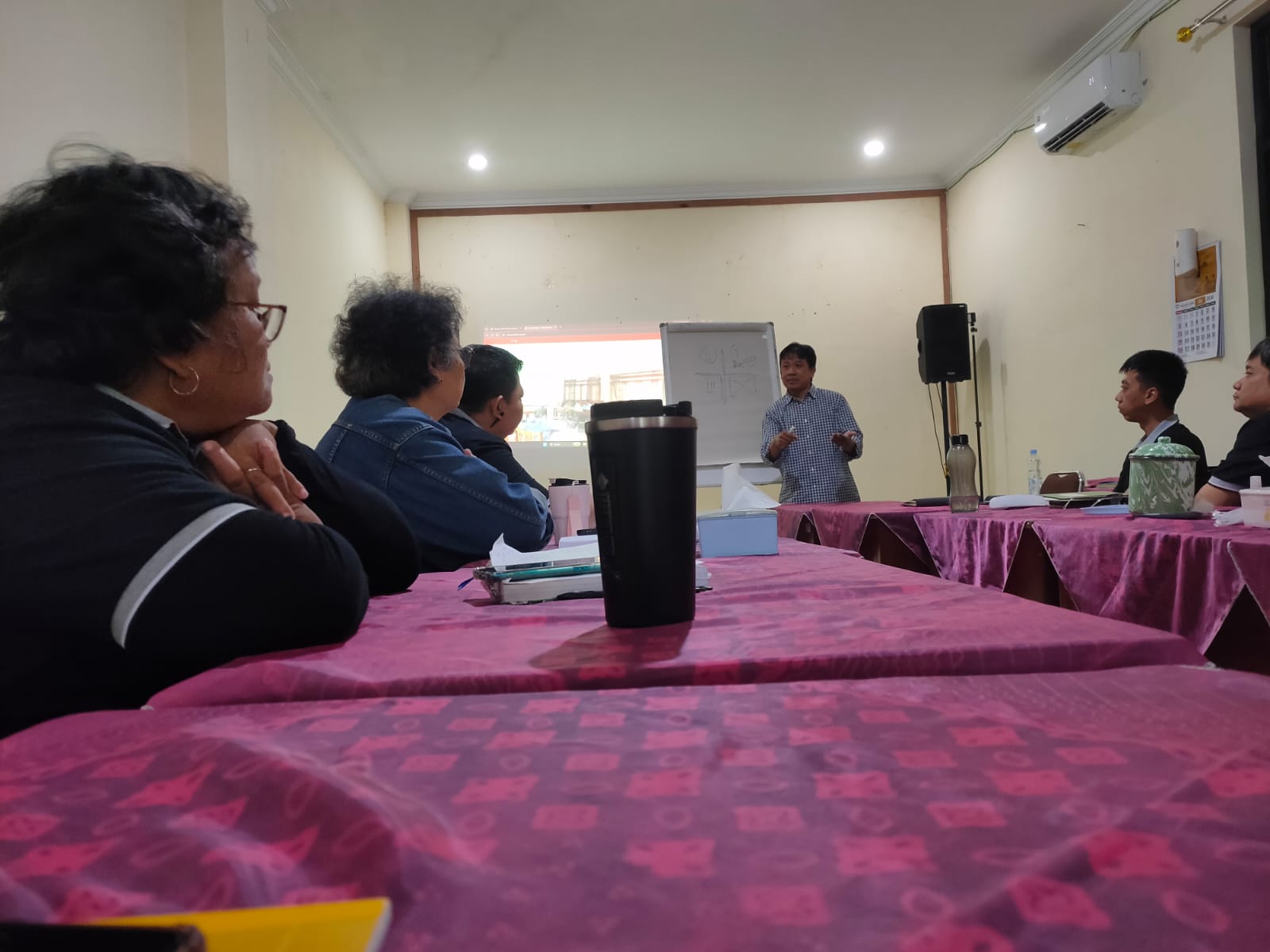
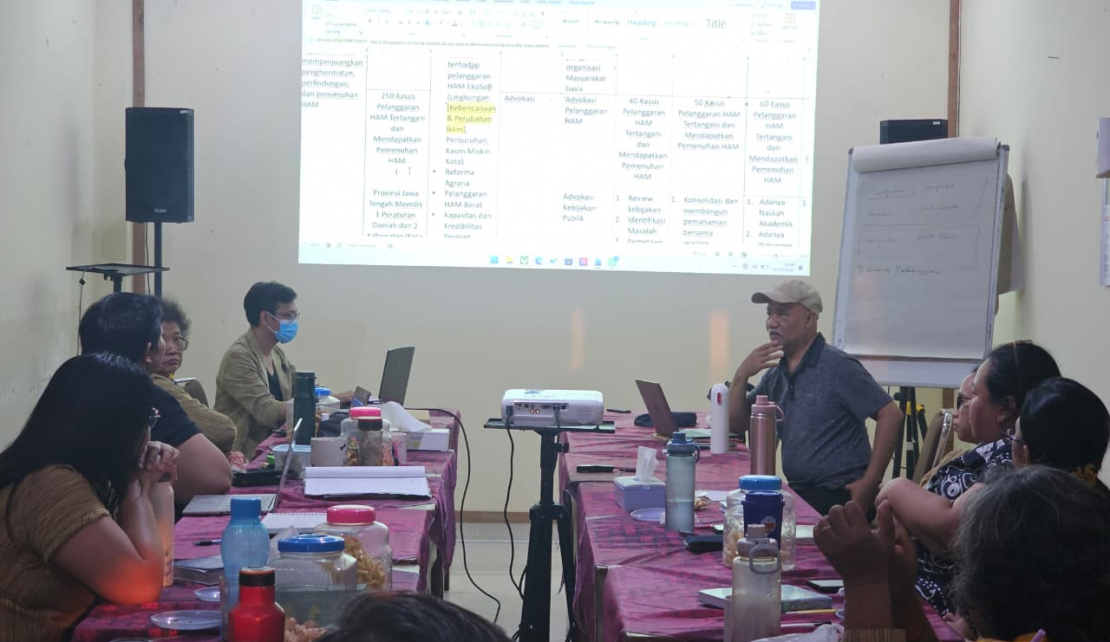
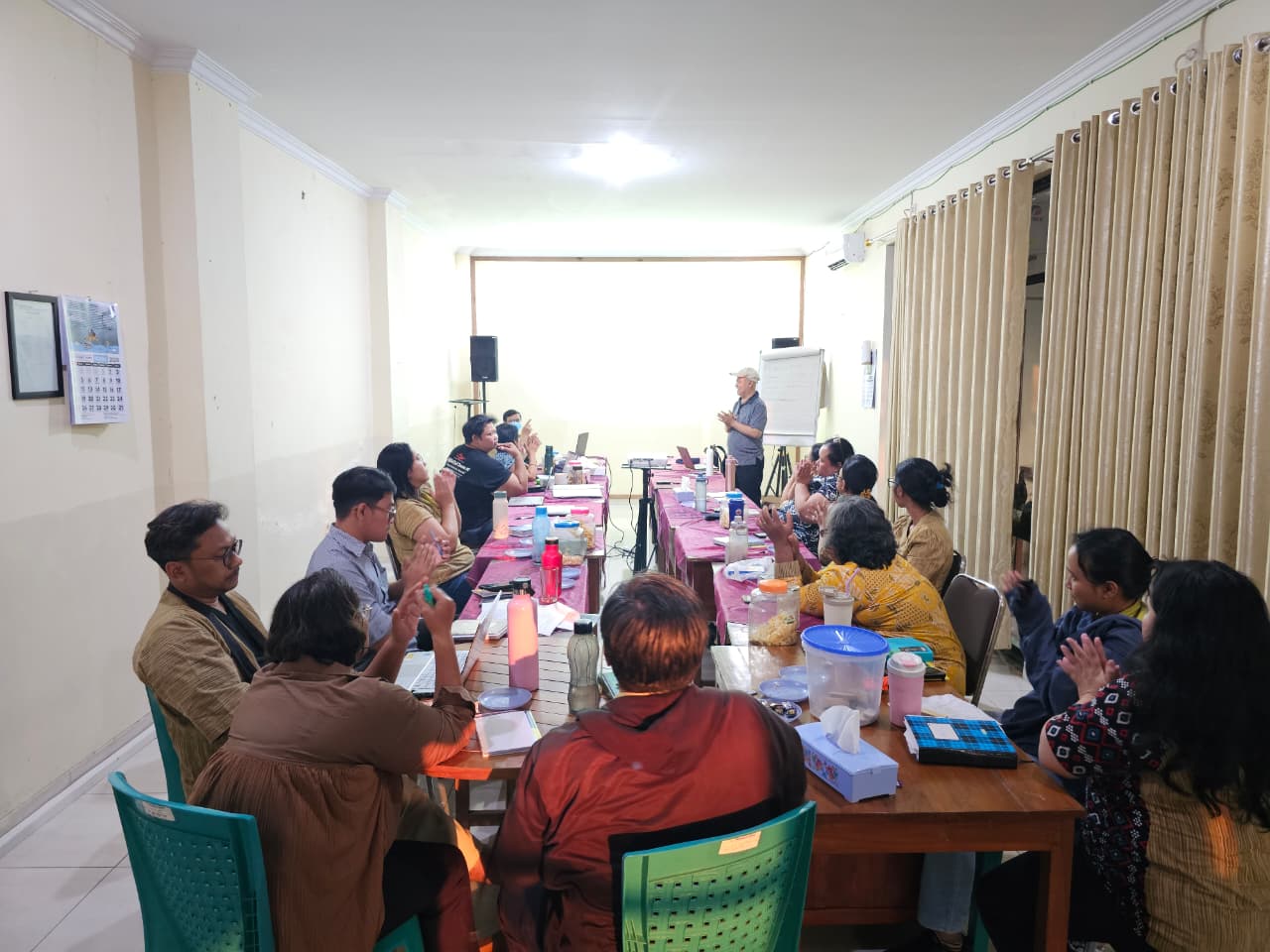
The third and last day of the workshop on YAPHI Strategic Planning at Anawim Hall, Yayasan YAPHI on Thursday (1/9) started with a reflection. Prior to discussion about indicators, programs, and five-year target(s), participants took time to see what had changed in the last two days together.
Changes did not always come in big decisions. They could be shifting feelings, changes in how to view work, or small realisation about things that had escaped attention.
For two participants who joined Yayasan YAPHI last month, the two-day workshop felt like brushing the hard crust stuck in the organisation for so long. The previous work that felt static slowly found its style. The organisational objective started to become clear like a vehicle with a clear direction of where it would need to go. The issue was not simply about knowing the objective, but ensuring that the people in the organisation had the same understanding of it.
Then there was an awareness that the organisation was not only facing the path outside. There were people inside it who brought their experience, emotion, habits, and way of communicating. For that reason, the situation of each personnel in the organisation was critical part of the journey.
The two-day workshop reminded of the vision and mission. A lot had been done, yet not all staff might have the same understanding. Simple terms like empowered might mean different things for different staff. Differences in understanding could affect the chosen journey ahead.
Group dynamics also thought lessons. Debates often led to conflict, yet that could help forge a common understanding. There was also awareness about the importance of focus and ability to listen in the midst of so many assignments that could easily shift attention.
Andreas Subiyono found a personal change. His regular walk with his dog had to stop during the two-day workshop. Something usually done without much fuss suddenly stopped. There, he realised that the workshop forced him to get away from the routine.
He also saw a change in role. As a facilitator, he was tempted to give too much information. Yet, the process being built was supposed to be a joint learning space. That realisation begged him to return to his previous role as a facilitator, not as someone who knew everything.
From such reflection, the discussion moved to more technical question. If the organisation’s objective had been formulated, how would one know that the objective was achieved?
Here, indicator became vital. Indicators served to read the organisation’s journey. Andreas likened it to a journey to Yogyakarta. The objective was clear, but the journey necessitated fuels, time, and tools to know how the journey proceeded. If initial estimate indicated two litres of gasoline and two hours’ journey and that initial estimate differed from the reality, the difference had to be scrutinised further in order to know what happened during the journey.
It was the same with the five-year strategic plan. It was critical to measure not only how many activities were implemented, but what changes happened, to who, in what number, and in what quality.
The discussion then moved to community capacity building. Information about human rights was not automatically an integral knowledge. Knowledge might not turn into ability to act. For that reason, community capacity building had to be framed from the point of knowledge and capacity to organise.
YAPHI needed to see the State responsibility in respecting, protecting, and fulfilling human rights. Regulations were one measure to promote, including regulations on women, children, gender-based violence victims, people with disability, and marginal groups.
Yet, the existence of regulations did not automatically mean that people’s rights were already fulfilled. Experience accompanying cases showed that regulations were not implemented as expected. For that reason, fulfilling human rights also needed to look into the real experiences of people who needed protection and accompaniment.
The number of cases YAPHI planned to address in five years was not determined solely by its intention. Past experiences, case trends, and organisational capacity were critical to determine the number.
After community and the State, participants then looked into the organisation itself. The discussion narrowed down to governance, management, and administration.
Governance was about how an organisation was structured, including its legality, policies, strategic plan, and role divisions. Management was about planning, implementation, monitoring, and resource evaluation. Administration was a component to support of those processes.
The issue was not simply about whether organisational documents were available, but whether people in the organisation understood the structure and implemented the rules. For that reason, it was critical for internal indicators to also consider human resources and organisation’s capacity to implement the system in place.
From there, participants looked again at the relationship between empowerment and advocacy. Empowerment related to the ability to meet basic needs, while advocacy was about the fight to ensure basic rights were respected and fulfilled. The two were inter-related and inseparable in human rights work.
The five-year indicators were then translated into annual targets. Targets did not have to be the same every year because political, economic, social and environmental situations changed constantly. Community aspiration was also key consideration, as were the strength and capacity of the organisation itself.
The three key components determined the targets: changes in the situation outside of the organisation, community needs, and strength which YAPHI possessed.
At the end, participants were reminded again that human rights work was not simply about legal approach. It was also critical to look into civil and political rights, and economic, social, and cultural rights within the same frame. YAPHI’s eco-feminism perspective also opened the space to look at the relationship between gender justice and ecological justice.
The third day did not end with a definite answer. It left a more concrete work: Determining the measure of the journey.
The five-year objective had been set. The path had been chosen. The targets had been defined. And the vehicle discussed during the three-day workshop was ready for implementation